
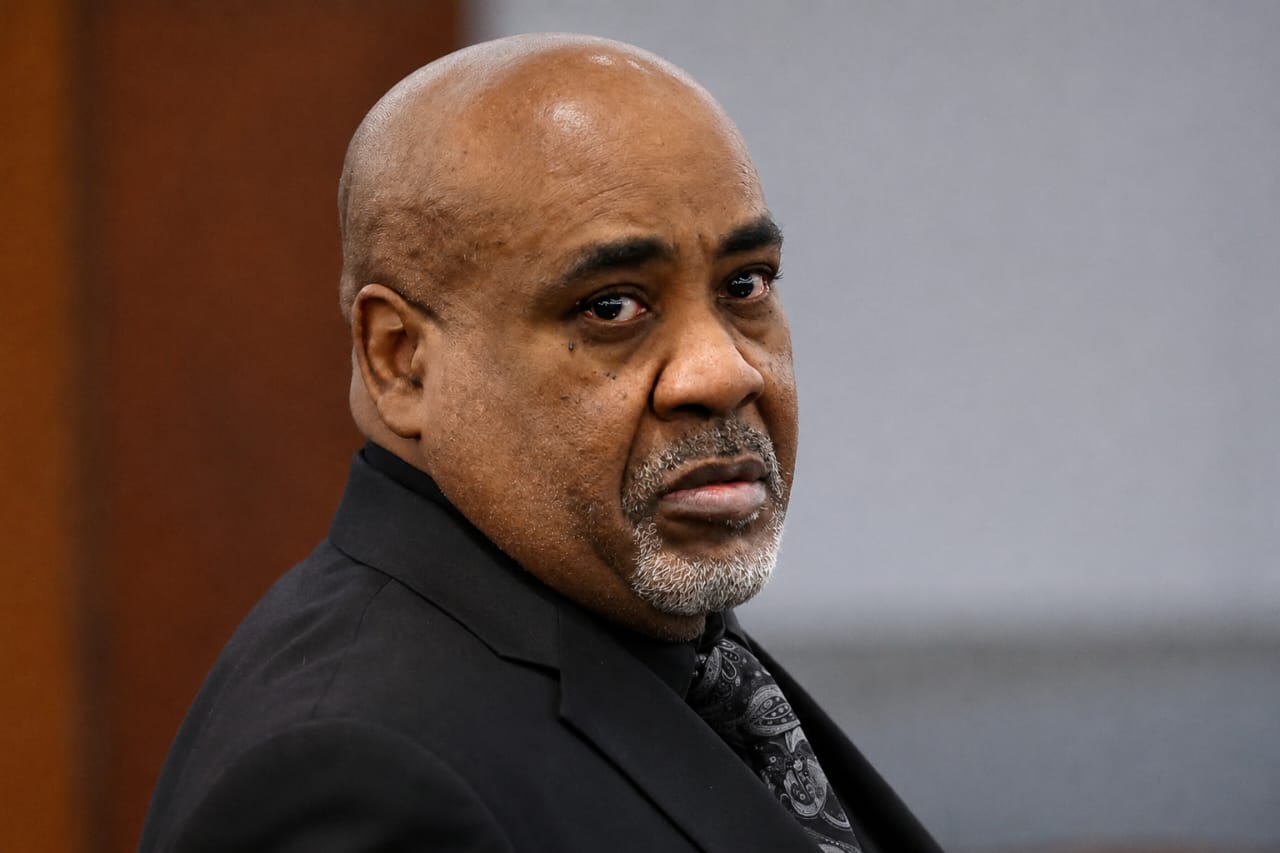
Nearly three decades after the killing of rap icon Tupac Shakur, a Las Vegas jury has found Duane “Keffe D” Davis guilty of first-degree murder in connection with the 1996 shooting that claimed the rapper’s life.
Davis, 63, was convicted on Monday, August 31, 2026, following a trial that placed one of hip-hop’s most enduring murder mysteries under renewed scrutiny. The jury deliberated for less than three hours before returning the verdict.
The conviction makes Davis the first and only person to be convicted in the long-running case. Prosecutors accused him of orchestrating the drive-by attack, although they did not allege that he personally fired the shots.
According to prosecutors, Davis obtained the firearm and organised the retaliatory attack after his nephew, Orlando “Baby Lane” Anderson, was involved in a physical confrontation with Shakur and members of his entourage at the MGM Grand in Las Vegas earlier on September 7, 1996.
Shakur was later travelling in a BMW driven by Death Row Records co-founder Marion “Suge” Knight when a white Cadillac pulled alongside the vehicle at a Las Vegas intersection and opened fire.
Shakur was struck several times and died six days later, on September 13, 1996, at the age of 25. Knight survived the attack.
Prosecutors: Davis was the “shot caller”
The prosecution’s case rested heavily on statements Davis himself had made over the years, including interviews, recordings and his 2019 memoir, Compton Street Legend.
Prosecutors argued that Davis repeatedly placed himself inside the white Cadillac used in the attack and described his role in arranging the shooting.
During closing arguments, Clark County Chief Deputy District Attorney Binu Palal told jurors that Davis’ role as the alleged organiser made him criminally responsible even if he was not the gunman.
“Who fired is not the question,” Palal said.
He argued that Davis supplied the weapon and directed the attack, adding: “The shot caller doesn’t just ride along.”
Palal also characterised the killing as a deliberate act of revenge rather than a spontaneous confrontation.
“It’s a plan, not an impulse,” he told the jury.
Prosecutors presented 24 witnesses during the trial, while the defence called three witnesses. The evidence also included Davis’ accounts of the shooting and material from his memoir.
Defence challenged evidence against Davis
Davis’ attorney, Michael Sanft, disputed the prosecution’s interpretation of his client’s statements, arguing that Davis had exaggerated or fabricated aspects of his alleged involvement for publicity and financial gain.
The defence also highlighted the absence of physical evidence directly placing Davis at the Las Vegas crime scene.
“They have nothing in this case that says that man was here in Las Vegas on September 7, 1996,”
Sanft argued in his closing address.
Davis had previously given varying accounts of the events, including statements in which he placed himself in the Cadillac, while later disputing that he was even in Las Vegas when Shakur was killed.
The jury nevertheless accepted the prosecution’s case and convicted him.
Gang enhancement dropped
Although Davis faced a gang-related enhancement alongside the murder charge, prosecutors ultimately dropped that portion of the case, citing difficulties involving witnesses.
The murder conviction itself remained intact, leaving Davis facing a potential life sentence. His sentencing is scheduled for October 13, 2026.
Following the verdict, Davis indicated that he intended to appeal the conviction.
Tupac’s family reacts
The verdict brought an emotional moment for members of Shakur’s family, who have spent decades living with the uncertainty surrounding his death.
Reports from the courtroom said Shakur’s sister, Sekyiwa “Set” Shakur, cried and embraced prosecutors after the verdict was announced.
For fans and followers of the late rapper, the conviction closes a major chapter in a case that remained unresolved for almost 30 years and generated countless theories about who ordered and carried out the killing.
Shakur, whose career encompassed music, acting and activism, became one of the most influential figures in hip-hop before his death.
The case also remains intertwined with the bitter East Coast-West Coast tensions and gang rivalries that surrounded parts of the American rap industry during the 1990s.
Davis’ conviction does not establish who physically fired the fatal shots. Prosecutors maintained throughout the trial that Davis could be held legally responsible for organising and facilitating the murder even without being the gunman.
The verdict therefore resolves one central question — Davis’ criminal responsibility for the killing — while leaving some details surrounding the actual shooting and the identity of the gunman part of the historical record and continuing debate.