
Former United States President Barack Obama has accused President Donald Trump of making costly foreign policy mistakes by launching a war against Iran, arguing that the conflict has strengthened Tehran’s strategic position, endangered American troops and driven up energy prices.
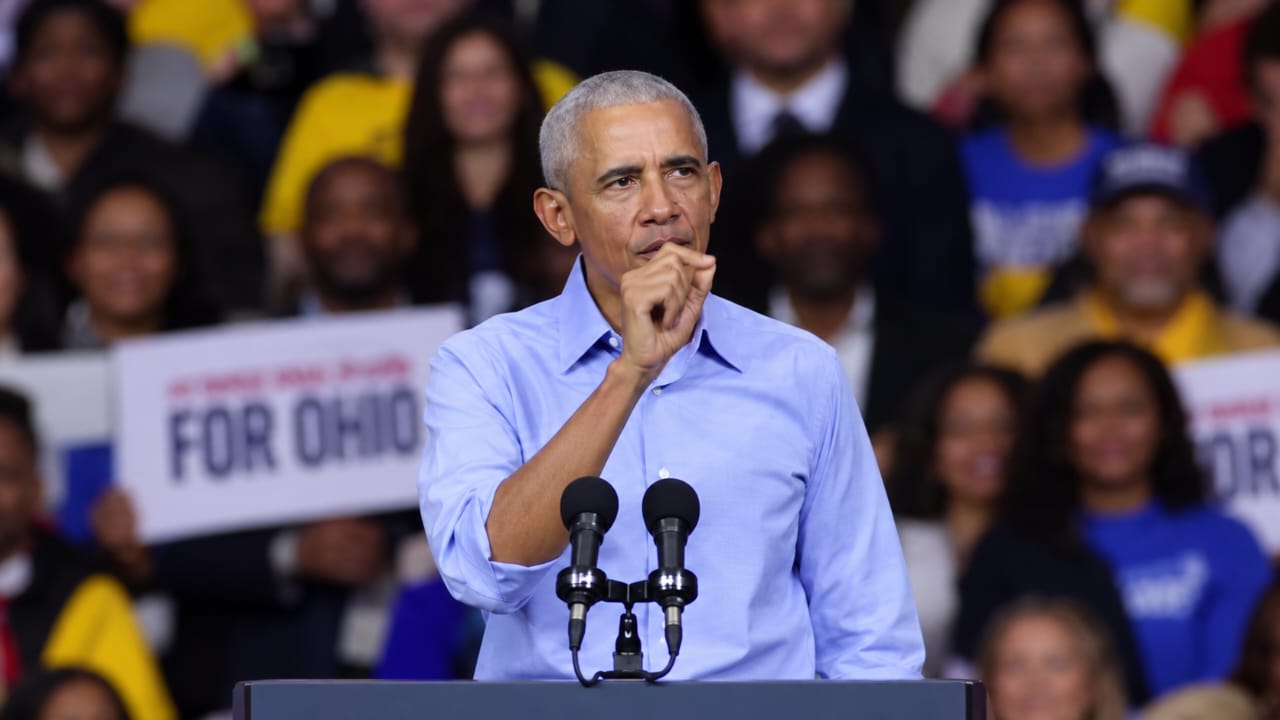
Obama made the remarks on Saturday, October 24, 2026, during campaign appearances in Ohio and Michigan ahead of the November 3 US midterm elections. He criticised Trump’s decision to launch the military campaign, questioning the administration’s justification for the conflict and its claims of success.
“The current president chose to make a series of bad decisions,” Obama said, describing the decision to launch the war as unnecessary and arguing that Americans had neither demanded nor voted for the conflict.
The former president said the consequences of the war extended beyond the battlefield, pointing to attacks on American military bases and allied positions, casualties among US service personnel and growing uncertainty surrounding international oil shipments.
He also argued that Iran had gained greater leverage over the Strait of Hormuz, a strategically important shipping corridor through which a substantial share of the world’s oil and liquefied natural gas normally passes.
According to Obama, Tehran’s ability to threaten shipping through the waterway had given it additional influence over global energy markets, contributing to higher oil and diesel prices.
Obama’s criticism challenged the Trump administration’s portrayal of the military campaign as a success, raising questions about whether the operation had achieved its stated objectives or created additional strategic and economic problems for Washington.
The former president also defended the 2015 nuclear agreement negotiated during his administration, arguing that diplomacy had offered a way to constrain Iran’s nuclear programme without resorting to military force.
The agreement, formally known as the Joint Comprehensive Plan of Action, imposed restrictions and monitoring requirements on Iran’s nuclear activities in exchange for sanctions relief.
Obama maintained that the deal had helped prevent Iran from acquiring nuclear weapons and questioned why the Trump administration had abandoned that diplomatic approach.
“I didn’t have to fire a missile. I engaged in diplomacy,” he said, contrasting his administration’s negotiations with the current administration’s military strategy.
The disagreement over the nuclear agreement has remained a major point of contention between the two administrations, reflecting broader differences over how Washington should address Iran’s nuclear ambitions and regional influence.
Obama’s remarks also placed the conflict at the centre of the political debate ahead of the November midterm elections, in which voters will determine control of the US Congress for the remainder of Trump’s term.
The former president argued that rising energy costs and the consequences of the war should prompt Americans to scrutinise the administration’s decisions and demand accountability.
His campaign appearances were aimed at mobilising support for Democratic candidates as the party seeks to challenge the Republican administration’s record on the economy, foreign policy and governance.
While Obama characterised the conflict as an avoidable strategic error, the debate over its military objectives, consequences and eventual outcome remains politically contentious.
His intervention has added to the political pressure surrounding the war, with the conflict increasingly tied to questions about American security, the cost of living and the limits of presidential decision-making.