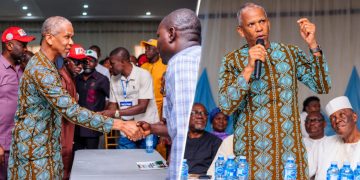

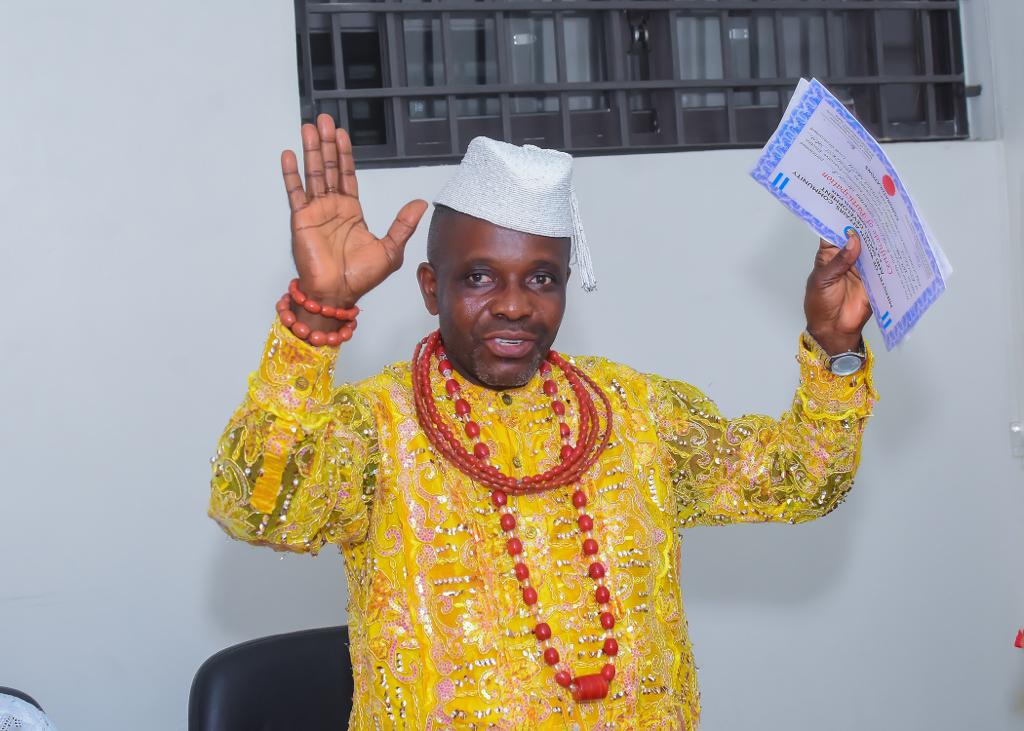
The President General of the Evwreni Clan Improvement Union (ECIU) in Ughelli North Local Government Area of Delta State, Chief Kenneth Ukpebitere, has broken his silence over the ongoing constitution controversy, insisting that the Constitution Review Committee completed its assignment and submitted its work before the disputed National Executive Council (NEC) meeting.
Speaking in a telephone interview with NewsNet Nigeria, Ukpebitere dismissed claims by the committee chairman, Dr. Okpako Sunday, that the committee neither concluded its work nor submitted any draft, describing such assertions as inaccurate.
“They’ve concluded their work long ago. They sent the script to us. Even the time we gave to them has expired. We were waiting and we begged them to send it, and they eventually did,” he said.
Ukpebitere further questioned the active involvement of the committee chairman in the review process, alleging that Dr. Sunday was largely absent while one of its members carried out the assignment.
“Even himself that is claiming to be chairman has never been on ground. The other executive did the job,” he stated.
On the controversy surrounding the source of the draft document, Ukpebitere maintained that the committee, through one of its officials, transmitted the material to him, contradicting denials by the committee’s secretary.
“The secretary confirmed to me that what she sent was part of the amended document. What they are calling incomplete was, in fact, a complete document sent to us,” he said.
Clarifying the constitutional process, the ECIU leader argued that the committee’s role is advisory and not final, stressing that its draft remains subject to scrutiny and modification by the union’s executive and NEC.
“The Constitution Review Committee does not have the final say. After their work, it comes to the executive, then to NEC. NEC will look at it—remove some areas, add others—before it proceeds further,” he explained.
Ukpebitere also defended the NEC meeting where the draft was considered, noting that members collectively reviewed both the old and new provisions, including areas not originally addressed by the committee with the Delta State laws on Community Development as amended.
“It was made evidently clear that the Delta State laws on Community Development Association (2019) as amended, provides for a two tenure, therefore, the constitution should be in alignment,” he said.
Addressing the contentious issue of tenure, Ukpebitere revealed that the committee had been specifically directed to consider broader governance practices, including the possibility of aligning with prevailing structures that allow two terms in office.
“We told them to look at the constitution holistically. We even pointed out that many government structures operate two tenures. Whether they worked on it or not is another matter, but we made it clear,” he said.
He rejected claims that any unilateral amendment was made, emphasising that any eventual decision on tenure would be determined through due process, including NEC deliberations and conference ratification.
“Nobody can just say they are going for two tenures. It will be subject to election and proper approval,” he added.
Ukpebitere also clarified that the Constitution Review Committee was constituted by his office and not by NEC, insisting that the committee was accountable to the executive.
“They were appointed by me, not NEC. So they have to report to us. Once their job comes to an end, we take it from there,” he stated.
He urged members of the Evwreni community to avoid escalating tensions over the issue, describing the dispute as unnecessary.
“Evwreni is too small for this kind of crisis. The constitution review is for the good of all. Why create problems?” he queried.
The ECIU crisis has continued to generate debate within the community, with both sides holding firm to opposing interpretations of the review process and the contentious tenure provisions.