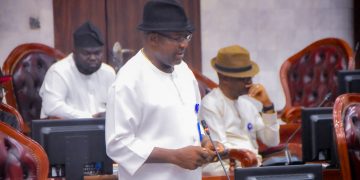

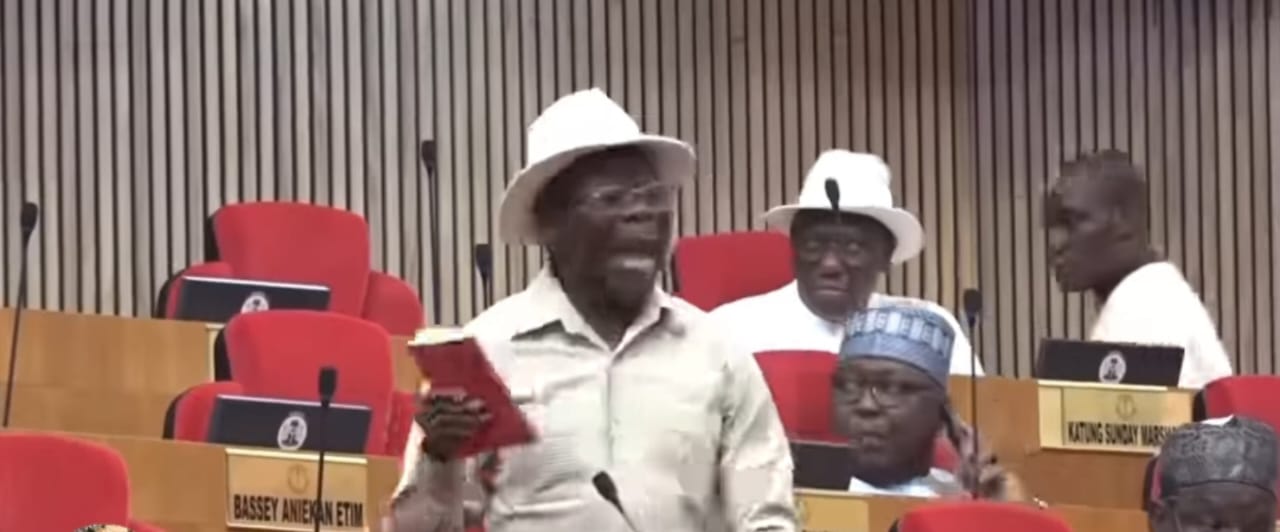
A heated confrontation erupted in the Senate on Wednesday as Senate President Godswill Akpabio and Senator Adams Oshiomhole clashed during plenary, barely 24 hours after the Red Chamber amended its Standing Orders to tighten eligibility requirements for leadership positions.
The tense exchange disrupted proceedings for several minutes after Oshiomhole attempted to raise a point of order while Akpabio was reading the Votes and Proceedings of the previous sitting.
Akpabio immediately ruled him out of order, insisting that under the Senate Standing Orders 2023, as recently amended, lawmakers are not permitted to raise points of order during consideration of Votes and Proceedings.
Despite repeated warnings from the Senate President, Oshiomhole continued pressing his objection, prompting Akpabio to invite former Senate Chief Whip, Orji Uzor Kalu, to clarify the rule before the chamber.
Kalu reportedly confirmed that the Senate rules do not permit interruptions at that stage of proceedings.
Senate Whip Tahir Monguno also cautioned Oshiomhole against further disruption and warned that disciplinary measures could be invoked if he persisted.
The disagreement nevertheless escalated, with Akpabio directing senators to pages 194 and 195 of the Votes and Proceedings while urging lawmakers to familiarise themselves with parliamentary procedures.
“We should not just go home, buy forms and come here without knowing the rules,” Akpabio reportedly said during the exchange.
An angry Akpabio later issued a stern warning to the former Edo State governor, saying: “Oshiomhole, if you become unruly, we will use the rules to take you out of the Senate.”
The Senate eventually restored order and continued with legislative business after Senator Adamu Aliero moved for the adoption of the Votes and Proceedings, seconded by Senate Minority Leader Abba Moro.
The clash came a day after the Senate amended its Standing Orders to restrict eligibility for presiding and principal offices to senators with at least two consecutive terms in the chamber. Under the revised rules, only lawmakers with substantial ranking status and continuous legislative experience can contest for top Senate positions in the 11th National Assembly.
The amendment has already generated political debate within the National Assembly, with observers suggesting it could significantly narrow the field of contenders for future Senate leadership contests.