
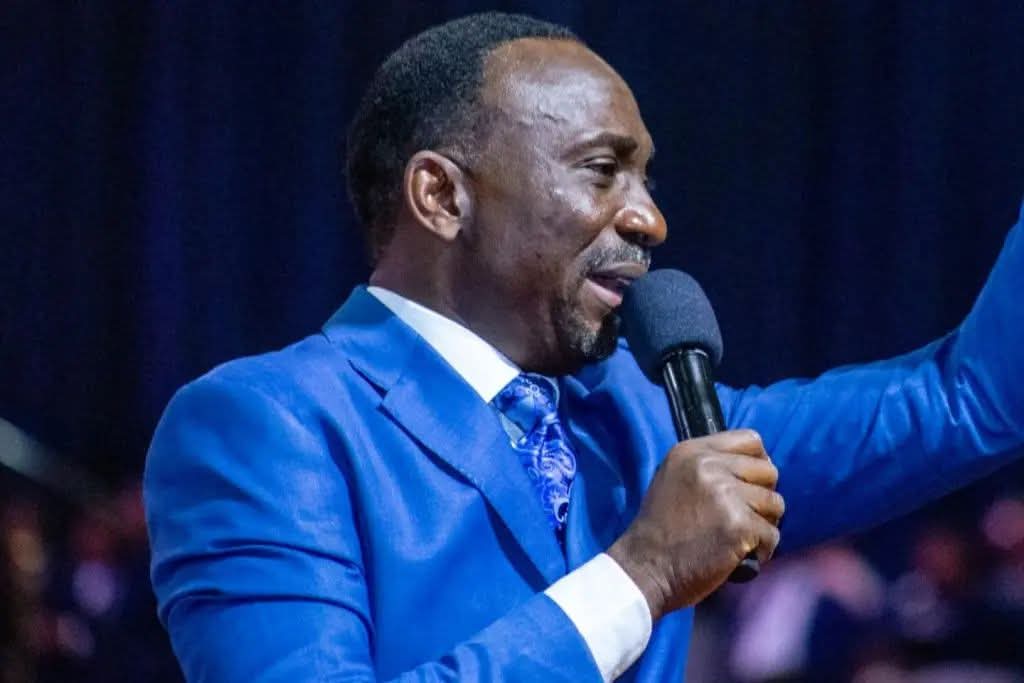
The Senior Pastor of Dunamis International Gospel Centre (DIGC), Dr Paul Enenche, has challenged the Federal Government to conduct a credible national population census capable of establishing reliable data on the religious composition of Nigeria.
Enenche made the call on Sunday during a sermon at the headquarters of the church in Abuja, while reacting to recent controversial comments attributed to Islamic cleric, Sheikh Muhammad Sani Yahya Jingir, who claimed that Muslims outnumber Christians in Nigeria.
Jingir, the Chairman of the Ulama Council of Jama’atu Izalatil Bid’ah Wa’ikamatis Sunnah (JIBWIS), had recently advocated continued support for Muslim-Muslim political tickets and urged Muslims to demonstrate their numerical strength through voting. He later told the BBC that he had no regret over his position.
Responding to the claim of Muslim numerical superiority, Enenche questioned the basis for such assertions in the absence of comprehensive and current data on religious affiliation.
“If you think you are superior, why didn’t you people allow for the census all these while?” Enenche asked.
He called on the Federal Government to conduct what he described as a credible census, saying Nigerians should be given the opportunity to identify their religious affiliations so that the country’s actual religious demographics can be established.
“Let everybody tell you what they believe in, then you will be shocked that where you think you come from, there are Christians almost dominating in that place,” he said.
Enenche also warned against treating Christians or the Christian community as politically or socially insignificant, amid the growing debate over religious identity and political representation ahead of the 2027 elections.
“Nobody should take Christian in this country for granted. Don’t take the church in Nigeria for granted,” he warned.
The pastor further criticised what he described as conduct capable of deepening division and bloodshed in the country, challenging Nigerians who contribute to religious and political tensions to reflect on their contributions to national development.
The latest controversy has again highlighted the longstanding absence of authoritative national data on Nigeria’s religious composition.