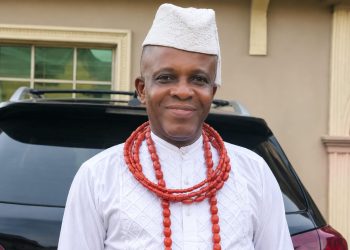

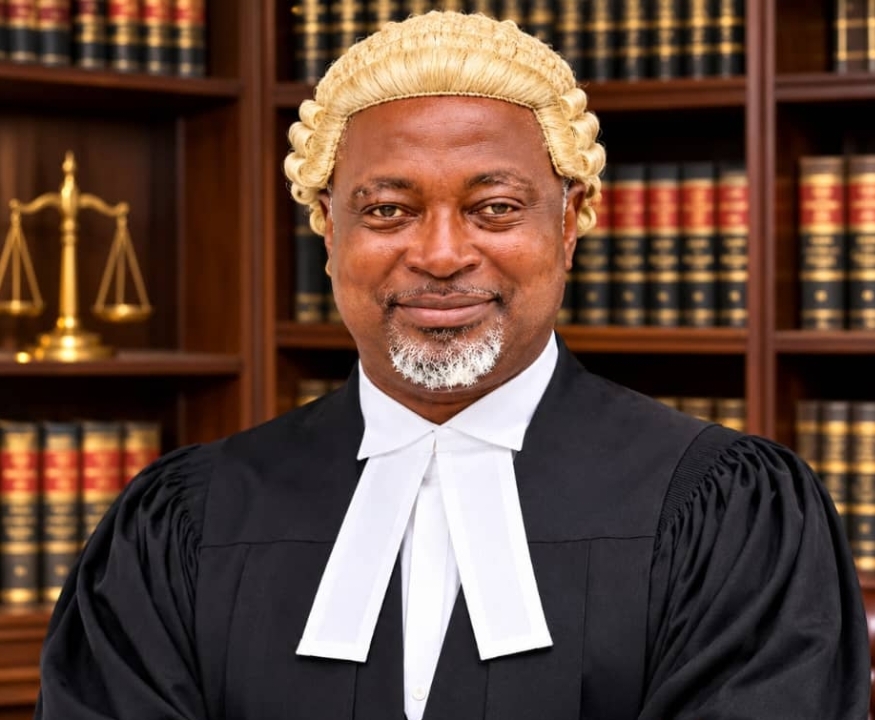
Chief Eric O. E. Osharode, a former Permanent Secretary and President-General aspirant of the Evwreni Clan Improvement Union (ECIU) of Evwreni Kingdom in Ughelli North Local Government Area of Delta State, has challenged the legality of the one-year tenure extension granted to the incumbent President-General, Chief Kenneth Ukpebitere, insisting that the decision cannot stand without ratification by the Union’s Conference.
Osharode, who is also the Osiobe of Evwreni Kingdom, described the extension as unconstitutional, arguing that the National Executive Council (NEC) lacks the authority to take a final decision on the matter without the approval of the Conference, which he said is the Union’s supreme policy-making body.
His position was contained in a rebuttal to a report published by NewsNet Nigeria on November 14, 2026, in which Ukpebitere attributed the extension of his tenure by one year to the peace, harmony and progress recorded under his administration.
Ukpebitere had explained that the extension, approved by NEC members, was intended to provide additional time for preparations for the next election, as his tenure was originally scheduled to end in December 2026.
However, Osharode argued that Article 6 of the 2016 edition of the ECIU Constitution clearly establishes the Conference as the supreme and final authority of the Union, with responsibility for making policy decisions.
He explained that while NEC comprises the President-General and members of his executive, as well as presidents and secretaries of the various branches, decisions taken by the council are subject to presentation before the Conference for ratification or rejection.
According to him, the Conference comprises NEC members, representatives of the various branches, women, traditional rulers, chiefs, patrons, legal advisers and other stakeholders, with traditional rulers and chiefs attending as observers.
Osharode questioned how a decision by NEC to extend the tenure of the President-General could be regarded as final without the approval of the Conference.
He described the purported extension as a violation of the Union’s constitutional provisions and warned that allowing such a decision to stand could undermine the organisation’s established governance structure.
The ECIU President-General aspirant also faulted the October 10, 2026 NEC meeting at which the tenure extension was reportedly approved, alleging that it was improperly constituted and conducted.
He claimed that some branches, including Ogor, Omoku and branches in Lagos and Port Harcourt, were not invited to the meeting.
Osharode further alleged that the President of the Orhuwhorun ECIU branch, Prince Daniel Diakodue, was removed from the meeting by Ukpebitere and that another person was brought in to replace him during the voting process.
He also accused the Ovie of Evwreni Kingdom, His Majesty Eruvwedede III, of exercising undue influence over the proceedings, alleging that the monarch effectively controlled the meeting.
These allegations could not be independently verified as of the time of filing this report. Ukpebitere and the NEC are yet to publicly respond to the specific claims contained in Osharode’s rebuttal.
Beyond the constitutional dispute, Osharode questioned the performance of the incumbent administration, alleging that it had failed to deliver completed infrastructure projects capable of addressing the community’s development needs.
He cited the prolonged absence of electricity in Evwreni, youth unemployment and what he described as the inadequate utilisation of resources accruing to the community from oil and gas activities.
The former Permanent Secretary also maintained that Ukpebitere should account for his stewardship before any consideration of tenure extension, insisting that the administration’s performance should be subjected to scrutiny by members of the Union.
He stated that Ukpebitere and his executive members were elected on December 16, 2023, at the ECIU Conference held at Eni Hall, Evwreni, and were issued certificates of return indicating a three-year tenure.
Osharode consequently argued that the incumbent administration should conclude its tenure and hand over on December 16, 2026, rather than rely on the NEC resolution to remain in office for another year.
He also dismissed claims that the Delta State Government had directed communities across the state to suspend elections until after the national elections, saying no evidence had been provided to substantiate the alleged directive.
Describing the reported directive as an attempt to justify what he considers an unconstitutional extension, Osharode expressed confidence that Governor Sheriff Oborevwori would not support any action capable of undermining democratic processes at the community level.
Calling for the intervention of the Delta State Ministry of Women Affairs, Osharode urged the ministry to ensure that Ukpebitere and his executive members leave office on December 16, 2026.
He argued that there was no crisis in Evwreni Kingdom to justify an extension under Article 14C of the ECIU Constitution, which he cited as providing for a six-month extension in the event of unforeseen circumstances.
As an alternative, Osharode proposed that, if a fresh election could not be organised before the expiration of the incumbent administration’s tenure, Ukpebitere and his executive members should step aside to allow the constitutionally recognised process to continue.
He recommended the constitution of a caretaker committee comprising the Odion Orode of Evwreni Kingdom, His Highness John Oudley Ovwufeti; the Otota of Evwreni Kingdom, High Chief Felix Ayovwe; and the Izomo of Evwreni Kingdom, High Chief Prince Time Udjuame.
He, however, advised against including the Ovie of Evwreni Kingdom in the proposed arrangement, citing the monarch’s alleged involvement in the disputed NEC meeting.
Osharode maintained that the interest of Evwreni Kingdom should take precedence over individual ambitions, urging stakeholders to resolve the disagreement through constitutional procedures and preserve peace in the community.
The controversy has placed the leadership transition of the ECIU under scrutiny, with the interpretation of the Union’s constitution and the authority of its Conference emerging as central issues in the dispute.