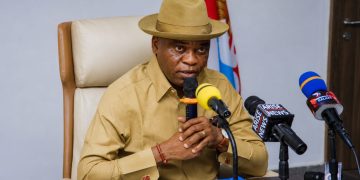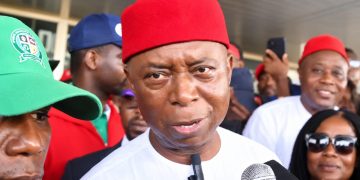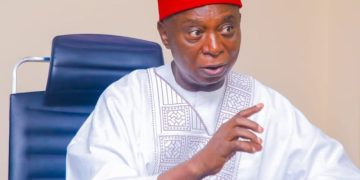

The National Secretary of the Ethiope State Creation Committee, Chief Anthony Ochuko Onyokoko, has exonerated Senator Ede Dafinone from allegations of working against the agitation for the creation of Ethiope State, declaring that the senator’s position should not be twisted into opposition to the Urhobo state-creation quest.
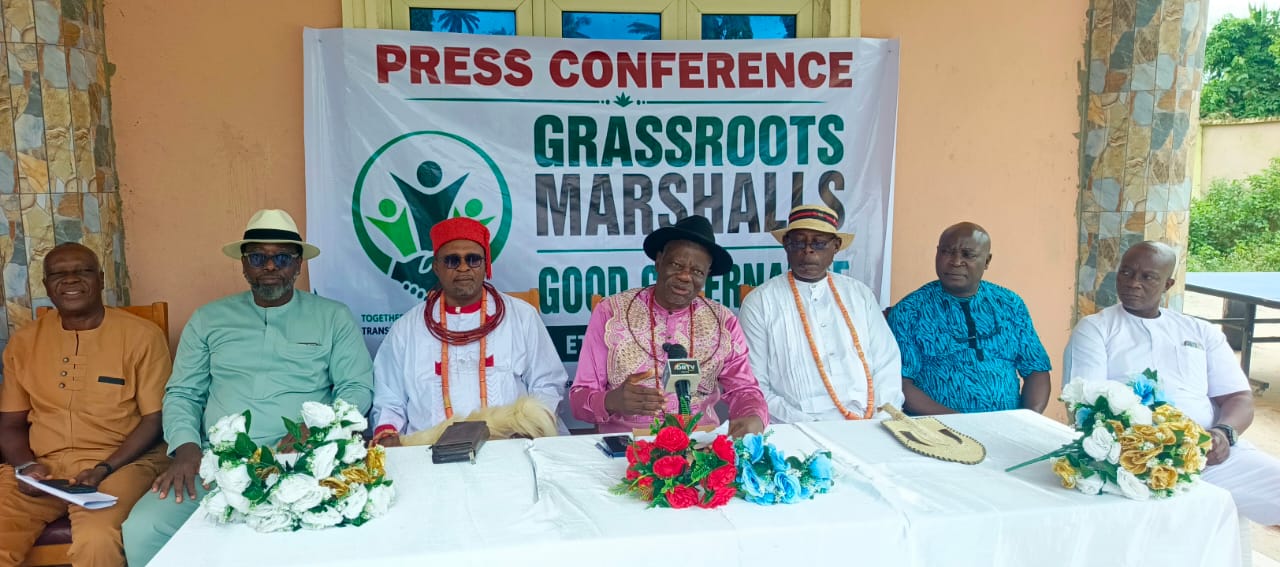
Onyokoko, who is also the Patron and Founder of Grassroots Marshall for Good Governance in Delta State, made the clarification on Saturday during a press conference regarding the recent and consistent attacks on Senator Dafinone by the Chairman of the Ethiope State Creation Committee, Chief Ominimini Obiuwevbi.
Onyokoko, who was joined by other leaders and members of Grassroots Marshall for Good Governance, warned Urhobo political gladiators against hijacking the agitation for the creation of Ethiope State to settle political scores or attack Senator Ede Dafinone, saying such conduct could jeopardise the collective aspiration of the Urhobo Nation.
Onyokoko said the Ethiope State agitation must not be turned into a political weapon against any individual or political opponent, noting that in a democratic system, individuals are free to express opinions, but such should not be weaponised.
He maintained that while the action attributed to Dafinone could legitimately be questioned, disagreement over the matter should not degenerate into personal attacks, political persecution or attempts to denigrate the senator.
The Ethiope State campaigner said politicians seeking elective positions on different platforms should present their policies, programmes and records to the electorate instead of hiding behind the agitation for state creation to advance their personal political ambitions.
“Ethiope State is a collective aspiration of the Urhobo people. It does not belong to any individual, political party or organisation. It belongs to all Urhobo sons and daughters,” Onyokoko declared.
“Whatever our political differences, they must never become greater than our common interest. We cannot successfully pursue a common state while fighting one another. Our strength lies in our unity.”
Onyokoko’s intervention is coming amid heightened political activities within Delta Central as politicians and aspirants position themselves ahead of the 2027 general elections.
He cautioned political actors against the temptation to posture as though they alone speak for the Urhobo Nation, stressing that no individual or group has a monopoly of Urhobo identity or interests.
“No one should use the name of Urhobo Nation to push his own political aspirations and agenda,” he warned.
“No one is more Urhobo than any other person, and Urhobo interests must supersede every individual’s political aspiration.”
According to him, the agitation for Ethiope State should unite Urhobo people across political parties rather than become another source of division.
He said the movement requires the combined efforts of traditional rulers, political leaders, religious leaders, professionals, youths, women, community leaders and Urhobo people in the diaspora.
“The struggle requires the cooperation of our traditional rulers, political and religious leaders, professionals, community leaders, youths, women and our people in the diaspora,” he said.
While distancing himself from personal attacks against Senator Dafinone, Onyokoko acknowledged the place of legitimate criticism,
“We may question his action, disagree with it, seek explanations and place our position before the public. We must also recognise that we are all entitled to our own views on how to achieve our agitation for a State for the Urhobo people.
“We must therefore distinguish between holding our Senator accountable and turning disagreement into personal or partisan political attacks.”
The National Secretary further rejected the idea that the disagreement automatically gave the Ethiope State Creation Committee the authority to demand a public apology from Dafinone on behalf of the entire Urhobo Nation.
“The Urhobo Nation is larger than any individual or committee. Unless there is a clear collective mandate, we should be careful about speaking in the name of the entire Nation,” he said.
“Accountability should not become a denigration.”
He appealed to the Chairman of the Ethiope State Creation Committee, Chief Dr Christopher Ominimini Obiuwevwi, and other stakeholders to moderate their public statements and avoid language capable of deepening political divisions within Urhobo Nation.
Onyokoko stressed that the current political disagreements should not blind Urhobo stakeholders to the practical realities of the state-creation process, which requires legislative action, political negotiations and cooperation among elected representatives.
He specifically noted that Senator Dafinone, as the duly elected senator representing Delta Central Senatorial District, could still be crucial to the legislative process required to achieve the creation of Ethiope State.
“Senator Ede Dafinone remains the duly elected Senator representing Delta Central Senatorial District. At this critical stage of our agitation, we may still require his legislative engagement and cooperation,” he said.
“We may disagree without becoming enemies. We may criticise without insulting. We may correct it without denigrating.”
He also called on members of the National Assembly, including senators and members of the House of Representatives from Urhobo constituencies, members of the Delta State House of Assembly and the state government to work together in pursuing the objective.
According to him, “The creation of a new state requires consultation, legislative engagement, consensus building and political cooperation.”
“We therefore need friends, not enemies; bridges, not divisions; dialogue, not confrontation.”
Ethiope State: We Should Not Repeat 1991 Mistake – Onyokoko
The Urhobo leader warned that the people must learn from what he described as historical mistakes surrounding the creation of Delta State in 1991, particularly the circumstances that led to the location of the state capital in Asaba.
He said internal disagreements and unhealthy agitation over the location of the capital deprived the Urhobo Nation of an opportunity that might otherwise have strengthened its political and administrative position.
“The circumstances surrounding the location of the capital of Delta State in Asaba following the creation of the State in 1991 should remind us of the consequences of division at critical moments,” Onyokoko said.
“We must not repeat such mistakes.”
He warned that the same fate could befall the current Ethiope State agitation if Urhobo leaders allowed personal political interests to overshadow the collective objective.
“History teaches us that a divided people can lose even when their cause is just,” he declared.
Onyokoko insisted that the Ethiope State Creation Movement was established as a non-partisan platform and must remain so.
“From the inception of the Ethiope State Creation Committee, we agreed that the movement should remain non-partisan,” he said.
“The demand for Ethiope State cuts across political parties, traditional institutions, religious bodies, professional groups and community organisations.”
He warned members of the committee and other stakeholders against assuming that their individual political views automatically represented the position of the entire movement.
“The political views of individual members must therefore not automatically become the position of the Committee, nor should membership of the Committee imply endorsement of every political statement made by another member,” he said.
“Ethiope State must never become an instrument for promoting or opposing the political ambition of any individual.
“Ethiope State must remain above individual political contests.”
The National Secretary said political parties and alliances would inevitably change, but the collective identity and aspirations of the Urhobo people would remain.
He therefore appealed to all political actors to subordinate their individual ambitions to the broader interest of the Urhobo Nation.
“Let me therefore reiterate my position. I stand by the right of the Ethiope State Creation Committee to respond officially to issues raised about it,” he said.
“But I do not endorse personal or partisan political attacks on Senator Ede Dafinone, or indeed on any other Urhobo leader, under the banner of the Ethiope State agitation.”
“This is not about taking sides in anybody’s political contest. It is about protecting the unity, integrity and non-partisan character of the Ethiope State Creation Movement.”
He added: “This is the time for unity, not acrimony; respect, not denigration; and non-partisanship, not political rivalry.
“Ethiope State must come first as that is the wish of every son and daughter of Urhobo Nation.
“Above all, let us continue to practise Politics Without Bitterness.”