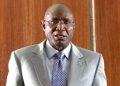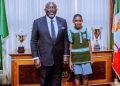

Senator representing Delta Central Senatorial District, Ede Dafinone, has called for greater unity, cultural preservation and strategic networking among the Urhobo people, saying the nation can only achieve its full potential when its people work together and deliberately prepare the next generation for leadership.
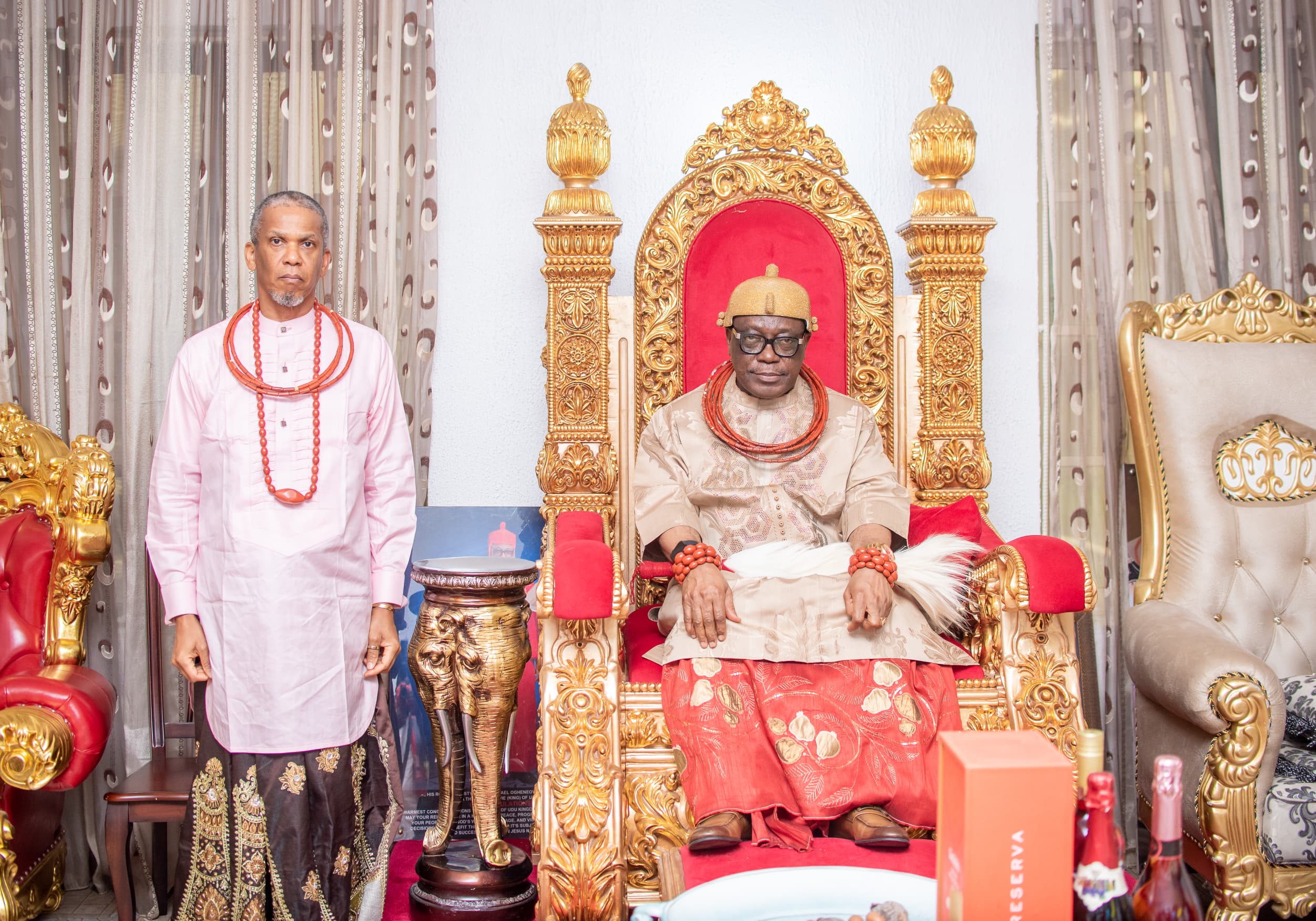
Dafinone made the call during a visit to the Ovie of Udu Kingdom, His Royal Majesty, Engr. Michael Ogheneovo Orugbo, JP, KP, Okporua I, where he sought the monarch’s prayers, blessings and counsel on his continued service to Delta Central and the advancement of the Urhobo nation.
The senator said his office remained open to traditional rulers and urged them to engage him whenever there were issues requiring his intervention at the national level.
Responding to concerns raised by the monarch on the need for effective representation and development, Dafinone said he regarded his Senate position as a platform to create opportunities for his people rather than a personal possession.
He stressed that the people of Delta Central needed to benefit from his growing network in Abuja, particularly in employment, education, government contracts and other legitimate opportunities.
According to him, human-capital development has been a major priority of his representation, especially because first-term legislators often lack the financial and political leverage available to more experienced lawmakers.
He disclosed that since his emergence as Chairman of the Senate Committee on Federal Character, his office had facilitated federal employment for some Urhobo people within two months, with more opportunities expected.
Dafinone said his approach was not limited to employment, explaining that he had also pursued scholarships, accommodation, contracts and other opportunities for qualified constituents.
He assured the people that his office does not charge for assistance, warning that anyone attempting to extort constituents in his name would face consequences.
He also highlighted projects executed across Delta Central, saying he had deliberately ensured that interventions were spread across the district’s wards.
He disclosed that projects had reached 83 of the 85 wards, with plans to cover the remaining two, while major interventions included a 53-bed student hostel at FUPRE, a railway halt at Egbo-Urhe in Ughelli South, a maternity ward at Ughelli General Hospital, an Accident and Emergency Ward at Sapele General Hospital.
The senator, however, said his ambition went beyond conventional constituency projects, stressing the need for landmark industrial investments capable of creating long-term economic opportunities for Urhobo.
He disclosed that he had recently spent four days studying the situation at the Delta Steel Company, Ovwian-Aladja, and he is preparing a memorandum to be submitted to the Government for intervention.
Dafinone said the future of DSC required a comprehensive technical assessment to determine whether the plant could be revived as an integrated steel facility or whether its infrastructure could be transformed into a modern manufacturing and industrial village.
He said the objective was to establish the actual condition of the facilities, identify equipment that may have been removed and determine the financial viability of restarting production.
He also appealed to Urhobo traditional rulers and leaders to take cultural preservation seriously, particularly the documentation of the Urhobo language, traditional marriage rites, funeral ceremonies and the proper presentation of kola nuts.
Dafinone said he had sponsored the Urhobo Language Competition for two consecutive years and would sponsor it for a third year, in honour of the late Senator Pius Ewherido, whom he credited with initiating the competition.
The senator expressed concern that some Urhobo cultural practices were gradually being distorted or replaced by traditions from other ethnic groups.
He recalled an occasion where people at a traditional Urhobo prayer were asked to remove their caps, stressing that such developments demonstrated why cultural practices needed to be properly documented and transmitted to younger generations.
Dafinone further urged Urhobo people to redefine wealth around service, legacy and collective advancement rather than personal accumulation.
He said his late father, Senator David Omueya Dafinone, left him a name and reputation that he was determined to uphold, adding that his personal ambition was to elevate the Urhobo nation and prepare a new generation capable of sustaining its progress.
The senator said his growing network in Abuja was one of the most valuable assets he could deploy for the benefit of his people, noting that relationships built in the National Assembly had made it easier for him to reach ministers, permanent secretaries and other key officials.
He argued that returning for a second term would provide greater leverage because legislative experience and networks become significantly stronger with time.
Earlier, the Ovie of Udu Kingdom urged Dafinone to remain accessible to the people and focus on using his legislative position to attract opportunities to the kingdom and the wider Urhobo nation.
The monarch stressed that the senator should not be judged solely by the amount of money distributed to individuals, but by the laws he makes, the networks he builds and the opportunities he brings home.
He also called for stronger community engagement, greater support for gas-based industries and proper protection of community and industrial assets, particularly those connected to the steel sector.
He urged Dafinone to work with relevant National Assembly committees and government authorities to ensure that Udu and the wider Urhobo nation benefit from the economic opportunities in their domain.
Dafinone said the future of Urhobo ultimately depended on unity, identity, mentorship and succession, stressing that the people could not afford to continue working at cross-purposes.
He described Urhobo as one of Nigeria’s significant ethnic groups with highly educated, skilled and successful people across the world, but lamented that the people often appeared marginalised because they failed to work together.
He said, “Everyone cannot be the captain of the ship at the same time,” adding that his present role was to help move the Urhobo “ship” towards its rightful destination before handing over to the next generation.