

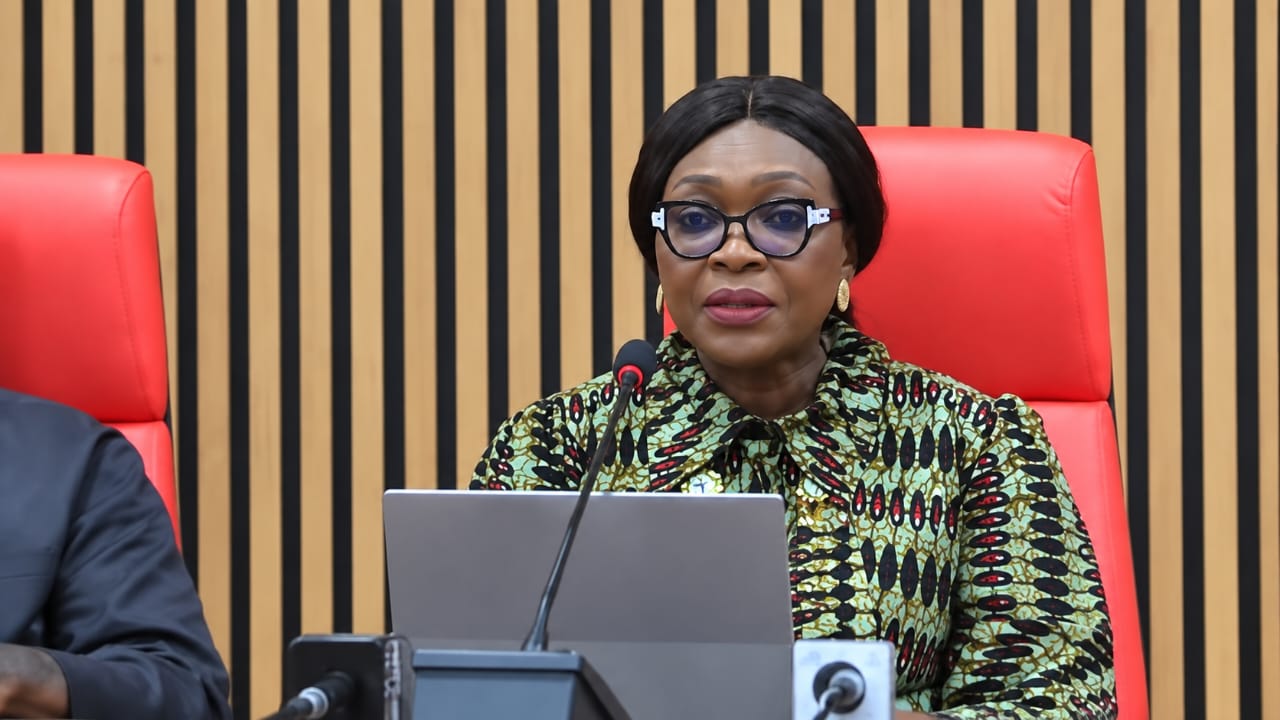
The Ophthalmological Society of Nigeria (OSN) has raised the alarm over the worsening shortage and maldistribution of eye-care professionals in Nigeria, warning that the country loses an estimated $150,000, or about ₦200 million, annually to the economy for every ophthalmologist lost to brain drain.
The Society also disclosed that more than 24 million Nigerians are living with visual impairment, with cataract, glaucoma, uncorrected refractive error and diabetic retinopathy identified as the leading causes of blindness.
The concerns were contained in the communique issued at the end of the 51st Ophthalmological Society of Nigeria Annual General Meeting and Scientific Conference, Abuja ASO 2026, held from September 2 to 4, 2026, at the Nigerian Army Conference Centre and Suites, Asokoro, Abuja.
The communique was signed by the OSN President, Dr. (Mrs.) Gloria Patrick-Ferife, Secretary-General, Dr. Tarela Sarimiye, and Public Relations Officer, Dr. Sewuese Bitto, and was read by Dr. Patrick-Ferife at the conclusion of the conference.
According to the President, the Society observed that 84 per cent of visual impairment cases in Nigeria are preventable or treatable, yet avoidable blindness remains highly prevalent despite years of interventions by ophthalmologists and other members of the eye-care team.
She said the situation was compounded by the shortage and uneven distribution of ophthalmologists and other eye-care workers, particularly the disparity between urban and rural areas and the increasing migration of trained professionals out of the country.
“The cost of losing one ophthalmologist was estimated at $150,000 (₦200,000,000) per annum to the economy,” the Society stated in the communique read by Patrick-Ferife.
AI, Digital Eye Care Raise New Concerns
The OSN also cautioned that Nigeria’s transition into digital eye care must be accompanied by adequate safeguards, infrastructure and ethical standards.
It identified concerns around the affordability and adequacy of cybersecurity for artificial intelligence-driven eye care, ethical issues surrounding AI, inadequate electricity supply and the rising cost of data as significant barriers to the effective deployment of digital technologies.
The Society said technological advances were rapidly changing eye and healthcare delivery globally, making it imperative for Nigeria to urgently modernise postgraduate and residency training in ophthalmology to reflect emerging global trends.
It consequently called for increased workforce development, training and retraining of ophthalmologists and other eye-care professionals, particularly in AI, electronic medical records (EMR) and digital diagnostics.
The OSN further advocated the adoption of tele-ophthalmology to expand access to eye-care services, stressing that AI should complement human expertise rather than replace healthcare professionals.
500 Free Cataract Surgeries Performed
The conference followed a series of pre-congress activities that began on August 26, including a World Press Conference at the Federal Medical Centre, Abuja.
Between August 27 and 28, the Society conducted a free surgical outreach during which 500 cataract surgeries were performed on indigent patients at the Federal Medical Centre, Abuja; University of Abuja Teaching Hospital, Gwagwalada; Asokoro District Hospital, Abuja; and Mararaba General Hospital, Nasarawa State.
The conference, themed “Reimagining Eye Care in the Digital Era,” with sub-themes on ethics, care of the carer and aesthetics of eye care, brought together more than 850 ophthalmologists and ophthalmologists in training from Nigeria and other African countries.
More than 40 local and international companies also exhibited at the event.
OSN Demands More Eye Doctors in Rural Areas
To tackle the workforce crisis, the Society called on state and local governments to employ more ophthalmologists and other eye-care workers to address the country’s uneven distribution of eye-health personnel.
It also urged governments to create an enabling environment that would encourage ophthalmologists and other eye-care professionals to practise in rural communities.
The OSN said professional boundaries must also be clearly defined and respected, while calling for an end to what it described as “unhealthy and needless” rivalry between ophthalmologists and some allied eye-care professionals.
It expressed concern over the alleged overstepping of professional boundaries by different cadres of eye-health workers and the growing prevalence of quackery and unauthorised local and foreign health practitioners engaging in eye-care interventions.
The Society also decried declining standards of medical ethics among healthcare practitioners generally and eye-care workers in particular.
Call for Eye Health Data on National Digital Platform
The OSN called for a data-driven approach to eye-care delivery and urged the immediate integration of eye-health data into the national DHIS2 platform to improve planning and service delivery.
It further recommended the exploration of solar-powered digital tools at the primary healthcare level, arguing that this would make digital-era eye care more practical and sustainable in Nigeria, particularly in underserved communities.
The Society also appealed to technology companies to provide reliable networks and digital platforms capable of supporting clinical service delivery to both rural and urban populations.
It urged the Federal Government to fully implement tax waivers for medical equipment and supplies and extend such incentives to digital eye-care equipment.
OSN Wants Essential Eye Drugs Added to NHIA List
The Society expressed concern over the non-availability of vital parenteral intraocular medications, particularly anti-vascular endothelial growth factor (anti-VEGF) drugs, on the National Health Insurance Authority (NHIA) drug list.
It resolved to engage relevant authorities to facilitate their inclusion on the list.
The OSN also appealed to government, development organisations, philanthropists and the general public to support the acquisition of modern technological equipment to extend quality eye-care services to remote populations.
Burnout, Ethics and “Care of the Carer”
Beyond technology and infrastructure, the Society highlighted the growing problem of burnout among ophthalmologists practising in Nigeria.
It resolved to strengthen mentorship and promote wellness among its members, while urging ophthalmologists to remain mindful of ethical standards regardless of the degree of automation introduced into their practice.
The Society also called on ophthalmologists to preserve the “aesthetics of eye care”, which it said should encompass poise, appropriate demeanour, effective communication, empathy and workplace harmony.
Progress Recorded Despite Challenges
Despite the concerns, the OSN noted several developments positively.
The Society commended the recent acquisition of surgical simulators at the Guinness Eye Centre, Lagos University Teaching Hospital, Idi-Araba, Lagos, and the Eleta Eye Institute, Ibadan, for training and retraining in phacoemulsification cataract and vitreoretinal surgeries, with support from philanthropists.
It also noted that financially up-to-date membership had increased from 30 per cent in 2025 to more than 60 per cent in 2026.
The Society acknowledged the role of its members in providing leadership and supporting the smooth operation of state eye-health committees, as well as their significant contribution to the implementation of the National Eye Health Strategic Development Plan 2024–2028 and the National Eye, Ear and Sensory Functions Health Programme (NESHP).
It further commended improved coordination between its National Executive Council, state branches and subspecialty groups.
The OSN acknowledged the support of the Coordinating Minister of Health and Social Welfare, Prof. Muhammad Ali Pate, and particularly the Minister of State for Health and Social Welfare, Dr. Iziaq Adekunle Salako, for their support for the National Eye Health Strategic Plan and eye healthcare in Nigeria.
It also reaffirmed its continued collaboration with international and continental ophthalmology organisations, including the International Council of Ophthalmology, International Ophthalmology Fellowship Foundation, African Ophthalmology Congress, and Middle East and Africa Council of Ophthalmology.
The 51st OSN conference was declared open by Salako, who represented the Federal Ministry of Health and Social Welfare, while other dignitaries included Nasarawa State Deputy Governor, Dr. Emmanuel Agbadu Akabe, representing Governor Abdullahi Sule; FCT Mandate Secretary, Dr. Adedolapo Fasawe, representing FCT Minister Nyesom Wike; and other senior government, military, medical and ophthalmological officials.
The Society expressed appreciation to the FCT Minister, the special guests of honour, the Conference Planning Committee led by Prof. Regina Morgan, conference sponsors and partners, members of the press and security agencies for their contributions to the success of the conference.