
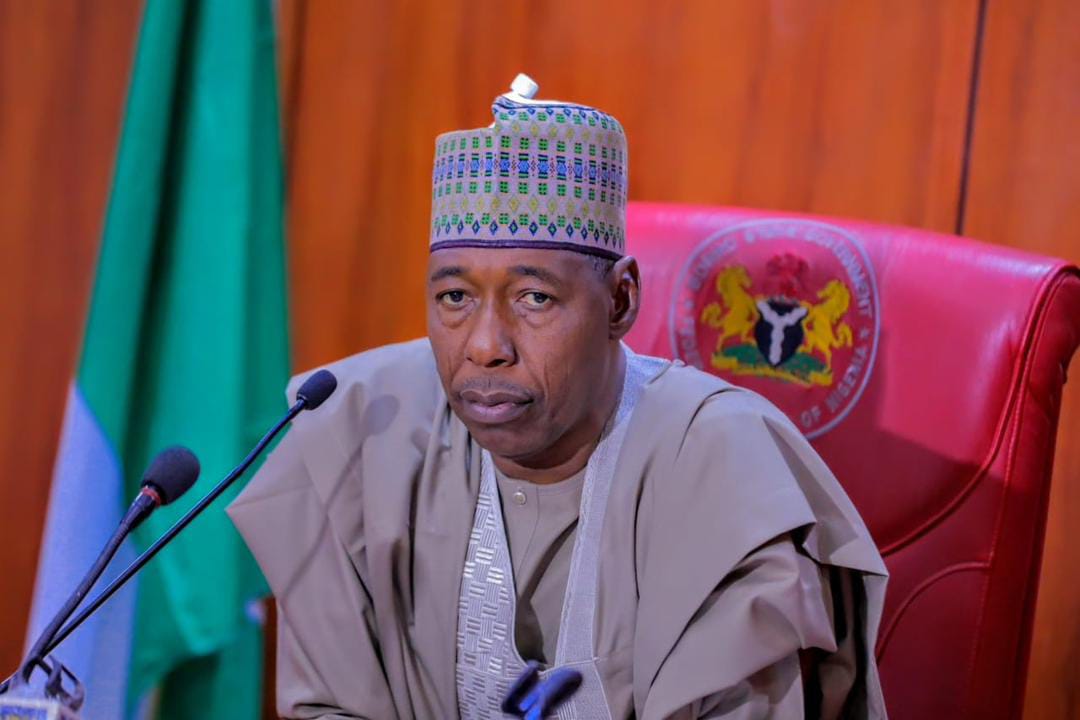
A governor in northern Nigeria has ordered the immediate suspension of village and ward heads in a border community after they failed to appear during his visit to assess ongoing efforts to rebuild the insurgency-ravaged area.
The governor issued the directive on Monday, August 31, 2026, while inspecting public infrastructure and assessing preparations for the return of residents displaced by years of insurgency.
He expressed concern over the absence of the traditional leaders, describing it as unacceptable at a time when residents were returning to their ancestral homes and communities were being rebuilt.
The affected community is Mallam-Fatori, headquarters of Abadam Local Government Area in Borno State.
The directive was contained in a statement issued by the governor’s Special Adviser on Media and Publicity, Dauda Iliya.
The governor directed the state Commissioner for Local Government and Emirate Affairs, Sugun Mele, to work with the Shehu of Borno to commence the appointment of new village and ward heads without delay.
He said the new appointees must be people of proven integrity, competence and commitment, capable of working with residents, government authorities and security agencies to restore stability and development.
“Traditional leaders have a critical role to play in stabilising communities emerging from conflict,” the governor said.
“Their presence is essential not only for maintaining communication between government and residents but also for strengthening community resilience and providing leadership as returnees settle into their ancestral homes.”
The governor also pledged to accelerate the reconstruction of critical infrastructure in Mallam-Fatori, directing the immediate construction of an Islamic education centre, primary and secondary schools and a hospital.
He said providing basic amenities would be critical to helping returnees rebuild their lives, restore livelihoods and settle back into the community.
Mallam-Fatori, a strategic border community, was badly affected by the insurgency, which forced residents to flee and left public infrastructure and economic activities severely disrupted.
During the visit, the governor inspected facilities in the community as part of efforts to assess reconstruction needs and support the return of displaced residents.
He also visited the headquarters of the 68 Battalion of the Nigerian Army, where he commended troops for their courage and commitment to maintaining security in the area.
He assured the military of continued government support to enhance their operational effectiveness and sustain the security conditions necessary for the return and resettlement of residents.