
By Ufuoma Egbe
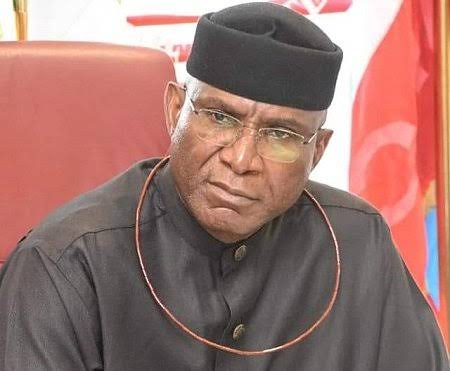
With less than a year to the 2027 general election, political alignments in Delta Central Senatorial District are beginning to reveal that what could have been one of the most fiercely contested senatorial races in recent history is now starting to fizzle out to a mere walkover for Senator Ede Dafinone. While elections are ultimately decided at the ballot box, recent developments suggest that the political structure of former Deputy Senate President, Senator Ovie Omo-Agege, is facing significant challenges. The former APC governorship candidate, now seeking a political comeback under the platform of the Nigeria Democratic Congress (NDC), must contend not only with an incumbent senator but also with a rapidly changing political landscape that appears increasingly favourable to the ruling APC in Delta State.
Omo-Agege’s latest bid comes after his defeat in the 2023 governorship election to Governor Sheriff Oborevwori. Having previously represented Delta Central in the Senate and served as Deputy Senate President, he now seeks to return to the National Assembly by challenging the incumbent senator, Senator Ede Dafinone. Unlike previous contests, however, the political environment has changed dramatically. The mass movement of former PDP leaders into the APC has reshaped political alliances across Delta Central, significantly altering the balance of power that existed during the 2023 elections.
Perhaps the most significant development has been the gradual erosion of Omo-Agege’s support base among politicians who previously constituted the backbone of his political machinery. Across the eight local government areas that make up Delta Central, several prominent political figures who worked for his emergence in previous elections have either openly declared support for the APC or are now actively working within the party’s enlarged political structure. In our political environment, individual defections do, to a large instance determine electoral outcomes; they ultimately affect grassroots mobilisation, campaign logistics, and voter outreach.
In Sapele, for example, the political equation appears markedly different from previous election cycles. The representative of Delta State on the NDDC Board, Rt. Hon. Monday Igbuya—once regarded as one of Omo-Agege’s strongest allies and a prominent figure within the James Ibori political family—now operates within the APC fold. Likewise, Hon. Moses Ogodo, another visible supporter of the former Deputy Senate President, is now serving as Commissioner for Environment under Governor Oborevwori’s administration. Their political realignment reflects the broader shift that has occurred following the merger of the former PDP structure into the APC.
A similar pattern is evident in Ethiope West, where many influential political leaders who previously maintained close relationships with Omo-Agege are now associated with the APC. Among them are respected political figures such as Dr Henry Ofa, Chief Emmanuel Ighomena, Chief William Makinde, Chief Solomon Golley, Chief Blessing Achaoja, and former council chairman, Chief Wilson Omene, who now serves as Special Adviser on Waterways Security. Equally significant is the alignment of the wider James Ibori political family, including Rt. Hon. Erhiatake Ibori-Suenu, the member representing Ethiope Federal Constituency, alongside other notable leaders. Collectively, these developments have substantially strengthened the APC’s political presence in the area.
If Ethiope East Local Government is anything to go by, Senator Ovie Omo-Agege’s political structure is rapidly falling apart as prominent loyalists continue to abandon his camp for the All Progressives Congress (APC). The latest and perhaps most significant defection is that of one of Okpara-land’s most formidable political leaders, Chief Love Ojakovo, who has formally aligned with the APC. His exit from Omo-Agege’s camp comes on the heels of Chief Francis Atanomeyvwi’s realignment, a longtime Omo-Agege loyalist whose appointment as the former DSP facilitated his appointment as Federal Commissioner.
The political implications are enormous. With Chief Faith Majemite, Barr Fred Latimor, Chief Emeyese and other key political actors now united in the APC, Omo-Agege’s remaining influence in the Kokori axis faces an uphill battle. Their combined grassroots strength is expected to neutralise Martens, one of Omo-Agege’s last notable allies in the area. The growing wave of defections has dramatically altered the political landscape in Ethiope East, with many party faithful convinced that Kokori and its surrounding political bloc have effectively slipped from Omo-Agege’s grip into the APC’s fold.
The situation is not markedly different in Ughelli South, where the APC has arguably become stronger following the influx of former PDP political leaders. One notable factor is the continued popularity of Rt. Rev. Francis Waive, the member representing Ughelli North, Ughelli South and Udu Federal Constituency. Waive enjoys considerable goodwill among Christian voters and grassroots supporters across the federal constituency. Political observers believe his influence could enhance the APC’s electoral prospects, particularly in communities where his constituency projects and accessibility have earned him significant public support.
Ughelli North, traditionally regarded as one of the APC’s strongest political strongholds, also presents a different picture from previous election cycles. Several prominent political leaders who once identified closely with Omo-Agege have reportedly remained within the APC despite his movement to the NDC. Influential grassroots politicians, including Olorogun O’tega Emerhor, Hon. Stella Okotete, Chief Ovie Agas, Chief Fred Majemite, Chief Sam Adjogbe, Chief Sam Mariere, Chief Jaro Egbo, Dr Isaac Akpoveta, and other established party leaders, continue to play active roles within the APC. There is also an emerging sentiment among some political stakeholders that leadership opportunities within Ughelli North and the wider Urhobo nation should not revolve around a single individual but should encourage broader participation by other capable leaders.
As we all know, Sapele, Okpe and Uvwie are strong bases of Senator Ede Dafinone, and considering the wonderful works Governor Oborevwori is doing across Delta Central and the state at large, the people of Delta will reward APC and all its candidates with overwhelming support come 2027 to enable the party to do MORE.
Supporters of Senator Ede Dafinone also point to the senator’s growing acceptance across Delta Central since assuming office in 2023. They argue that his legislative engagements, constituency interventions and collaborative approach to representation have strengthened his political standing. Rather than pursuing confrontational politics, Dafinone has cultivated relationships across different political interests, a strategy that supporters believe has broadened his appeal beyond traditional party lines. Whether this translates into electoral advantage remains to be seen, but the perception of an incumbent consolidating his base while his principal challenger rebuilds a new political platform cannot be ignored.
Nevertheless, it would be premature to conclude that the election has already been decided. Nigerian elections have repeatedly demonstrated that political calculations can change rapidly. Omo-Agege remains an experienced politician with a loyal support base, considerable name recognition and a reputation as a formidable campaigner. His supporters believe that public dissatisfaction with some aspects of governance, combined with the appeal of the NDC and his personal political profile, could still produce a competitive contest. They also hope that voting patterns similar to the unexpected outcomes witnessed during the 2023 presidential election could work in his favour.
Yet, the political realities presently unfolding across Delta Central suggest that Omo-Agege faces perhaps his most difficult electoral battle since entering the Senate. Unlike previous elections where he benefited from a more cohesive political structure, he now confronts an expanded APC that has absorbed much of the former PDP establishment while retaining its original grassroots machinery. If the current alignments remain unchanged, the contest may ultimately be determined less by personal popularity than by organisational strength, local mobilisation, and the ability of each camp to translate political endorsements into votes on election day.
As things stand today, the momentum appears to favour Senator Ede Dafinone and the APC. For now, what is evident is that Delta Central is witnessing a significant political realignment—one that has placed Omo-Agege’s once-formidable political structure under unprecedented pressure. Whether that pressure results in electoral defeat remains a question that only the electorate can answer in 2027.
– Ufuoma Egbe, A Public Affairs Analyst, writes from Eku, Delta State.