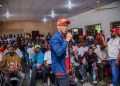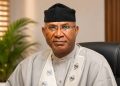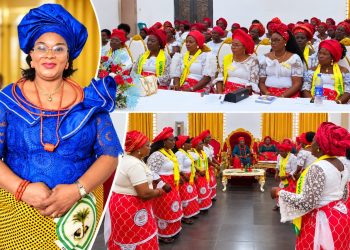

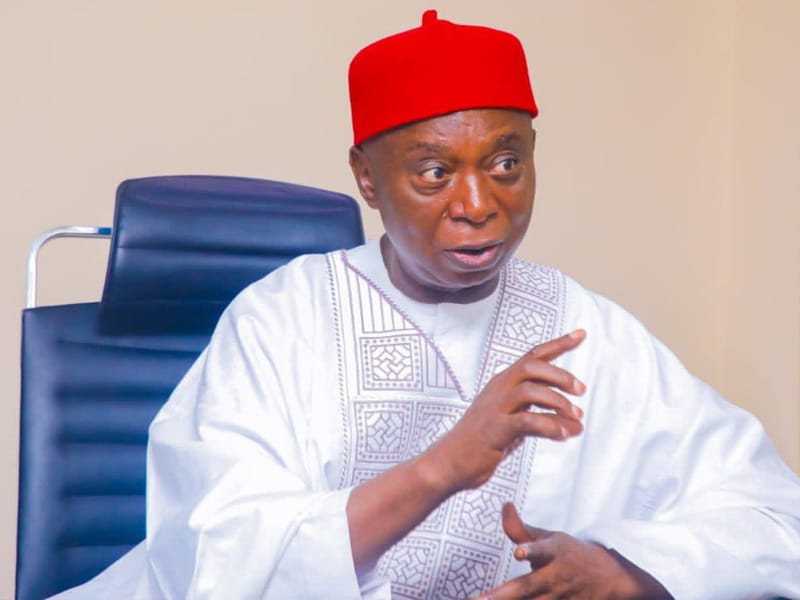
From the long-running courtroom battle over Aniocha North II to interventions involving detained traditional rulers, security concerns and grassroots development, Senator Ned Munir Nwoko’s representation of Delta North has been marked by a combination of legislative motions, stakeholder engagements and constituency-focused projects.
A review of his reported activities in the 10th National Assembly shows interventions spanning democratic representation, security, healthcare, education, agriculture, youth and women empowerment, as well as community infrastructure.
Aniocha North II Restoration
One of the most significant legislative milestones associated with Nwoko’s representation is the restoration of the Aniocha North II State Constituency after years of legal and administrative uncertainty.
The struggle dates back to 2014, when residents of nine communities in Aniocha North Local Government Area — Idumuje-Unor, Idumuje-Ugboko, Nkwu-Nzu, Ugboba, Idumuogo, Ugbodu, Ubulubu, Anioma and Ogodo — approached the courts seeking restoration of the constituency.
The Federal High Court initially dismissed the case, but the Court of Appeal, Benin Division, ruled in favour of the communities in November 2017. The Supreme Court subsequently affirmed the appellate decision in 2019, making the judgment final and binding.
Despite steps by the Independent National Electoral Commission to facilitate implementation, including stakeholder consultations and correspondence with the National Assembly, the matter remained unresolved legislatively for several years.
On March 11, 2025, Nwoko moved a motion in the Senate seeking implementation of the Supreme Court judgment. The Senate approved the restoration and called for the constituency to take effect in the next Delta State House of Assembly election after the expiration of the current legislative term.
The matter subsequently received the concurrence of the House of Representatives on May 15, 2025, when the House adopted the motion and mandated its Committees on Electoral Matters and Legislative Compliance to ensure implementation.
Nwoko, speaking after the Senate action, described the development as a matter of justice and constitutional representation, stressing that a Supreme Court judgment should be respected and implemented.
“I am glad that we have managed to pull it through because it was not as straightforward as people might think,” he said after the Senate considered the motion.
The concurrence of both chambers consequently moved the issue from a prolonged legal dispute into the implementation stage, with INEC expected to give effect to the restoration in accordance with the National Assembly resolution and applicable constitutional provisions.
Intervention in King Clement Ikolo’s Detention
Nwoko’s activities have also extended beyond conventional legislative business into security and peacebuilding interventions.
Following the March 2024 killing of military personnel at Okuama, the detention of King Clement Ikolo, the monarch of Ewu Kingdom, generated concern among traditional rulers, political leaders and community stakeholders in Delta State.
Nwoko was among the Delta senators who engaged the military authorities over the monarch’s detention. Reports at the time said Nwoko, alongside Senators Ede Dafinone and Joel-Onowakpo Thomas, interfaced with military authorities in efforts that culminated in the monarch’s release.
The military subsequently released King Ikolo to Senator Dafinone, with an understanding that the senator would produce the monarch whenever his attention was required. The Chief of Army Staff said the decision followed investigations that found insufficient evidence to indict the monarch.
Nwoko’s intervention, according to the account presented in his performance profile, was driven by the argument that justice and security considerations could be pursued without unnecessarily deepening tensions in communities already affected by violence.
From Illegal Arms Factory to Talent Rehabilitation
Another intervention that placed Nwoko at the intersection of security and technology followed the discovery of an illegal arms-manufacturing facility at Onicha-Olona in Aniocha North.
The Nigerian Army’s 63 Brigade uncovered the facility in March 2024 and arrested eight suspects. Military authorities said the facility had equipment for manufacturing weapons and could produce several guns weekly.
Rather than viewing the incident solely through the lens of criminality, Nwoko argued that some of the technical abilities demonstrated by those involved could potentially be redirected towards legitimate national technological development.
Following engagements with the 63 Brigade, he announced that four family members connected with the incident had been released, while efforts continued concerning others in detention.
Nwoko also advocated a broader policy response involving institutions such as the Defence Industries Corporation of Nigeria and the Ministry of Science and Technology, arguing that technical skills discovered in illicit environments could be rehabilitated and deployed for lawful purposes.
His proposed concept of a National Talent Rehabilitation and Integration Act seeks to create a framework through which individuals with demonstrable technical abilities but backgrounds in illicit activities could undergo rehabilitation, training and reintegration into the formal economy.
The philosophy behind the proposal, as presented in his position on the Onicha-Olona incident, is that Nigeria should be capable of converting technological ingenuity into productive national capacity rather than allowing potentially useful skills to remain outside the law.
Constituency Projects Across Delta North
Beyond legislative motions and security-related interventions, Nwoko’s scorecard lists a broad range of constituency projects and programmes covering Delta North’s nine local government areas.
The interventions include the construction and renovation of classroom blocks, establishment of ICT centres, provision of computers and laptops, healthcare-centre renovation and equipment, medical outreaches, agricultural support and empowerment programmes.
Among the listed education interventions is the ongoing construction of classroom blocks at Ika Grammar School, alongside classroom construction and renovation projects in other selected communities.
The scorecard also lists ICT centres and computer provision aimed at improving digital access for students and residents across the senatorial district.
In healthcare, projects listed include the renovation and equipping of the Idumuje-Ugboko Medical Centre and Ezi Primary Health Care Centre, provision of drugs to selected primary healthcare centres and a series of medical outreach programmes covering communities across Delta North.
Previous reports on Nwoko’s constituency interventions similarly document medical outreaches, healthcare equipment, solar-powered boreholes, streetlights, roads and other community projects across the district.
Youths, Women and Agriculture
The scorecard places considerable emphasis on human-capital development, particularly programmes targeted at women, youths and farmers.
Listed interventions include training and empowerment programmes for market women, youth capacity development, women-focused skills acquisition, agricultural training, livestock farming, cassava production and the production of Akwa-Ocha.
Other listed initiatives include the procurement of tractors and farming equipment, establishment of fish farms, provision of fertilisers and the development of mechanisation and extension-service systems.
Earlier documented programmes attributed to Nwoko included cash grants and vocational training for women and youths, alongside agricultural support and medical outreach programmes.
The emphasis, according to the senator’s performance profile, is to move constituency representation beyond physical infrastructure by combining projects with skills development and opportunities for economic participation.
A Representation Built Around Multiple Fronts
Taken together, the activities present a model of representation that combines legislative advocacy with interventions in community development, healthcare, education, agriculture, technology and security.
The restoration of Aniocha North II remains particularly significant because it involved a constitutional and judicial question that had remained unresolved for years before the National Assembly acted on it. At the same time, the documented constituency projects demonstrate a parallel focus on grassroots development and human-capital interventions.
For Delta North communities, the ultimate test of the various initiatives will lie not only in the number of projects captured or announced, but in their completion, accessibility and measurable impact on residents.
As the 10th National Assembly progresses, the unfolding story of Nwoko’s representation will therefore be shaped by what happens after the motions are passed, the projects are captured, and the policies are proposed — when legislative promises finally meet the everyday realities of constituents.