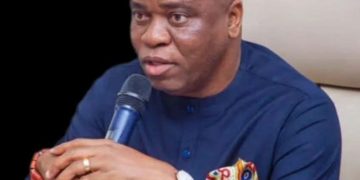

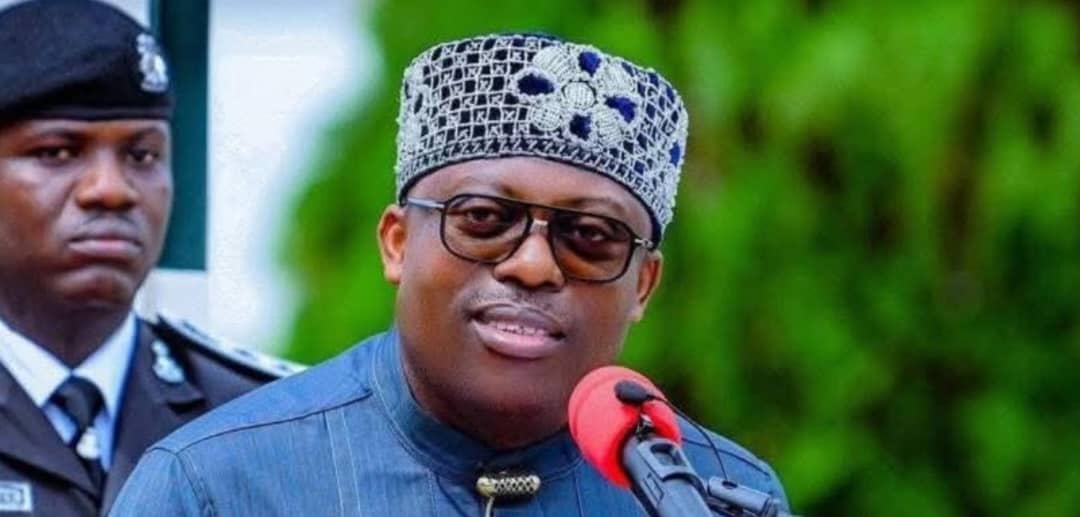
Rivers State Governor Siminalayi Fubara has dissolved the State Executive Council with immediate effect, ordering all commissioners, special advisers, and affected political appointees to hand over to Permanent Secretaries or the most senior career officers in their respective ministries.
The decision, announced on February 12, 2026, represents one of the most consequential administrative moves since Fubara assumed office, effectively clearing the slate of the state’s political leadership structure.
According to official directives, the dissolution is intended to reposition governance, streamline decision-making, and reinforce the role of the civil service in driving service delivery.
Until a new cabinet is constituted, ministries and agencies will be run by career officials to ensure continuity of government operations.
While the government has framed the action as an administrative reset, the development has reignited political debate across the state.
Analysts link the timing to Rivers’ long-running political crisis, which has pitted Governor Fubara against his predecessor and political benefactor, Nyesom Wike.
The rift, which surfaced months after Fubara’s inauguration in 2023, triggered a chain of events including factional splits within the House of Assembly, multiple court cases, and Supreme Court decisions that reshaped the state’s political landscape and nullified some earlier actions of government.
In recent weeks, political circles in Abuja and Port Harcourt have been awash with reports of reconciliation talks involving Governor Fubara, Wike, and President Bola Tinubu.
While no official statement has confirmed the content or outcome of such meetings, the cabinet dissolution has intensified speculation that a broader political realignment may be underway.
Some observers believe the expected reconstitution of the cabinet could reflect compromise arrangements designed to ease tensions and stabilise governance in Rivers State.
Others argue the move may be aimed at consolidating executive authority ahead of future political contests.
What remains certain is that the dissolution paves the way for a fresh cabinet.
Governor Fubara is expected to forward a new list of commissioner-nominees to the Rivers State House of Assembly for screening and confirmation—a process likely to attract intense scrutiny given the state’s recent history.
As Rivers State enters this transitional phase, political stakeholders and residents alike are watching closely to see whether the impending appointments will usher in stability or reopen old fault lines in one of Nigeria’s most politically sensitive states.