

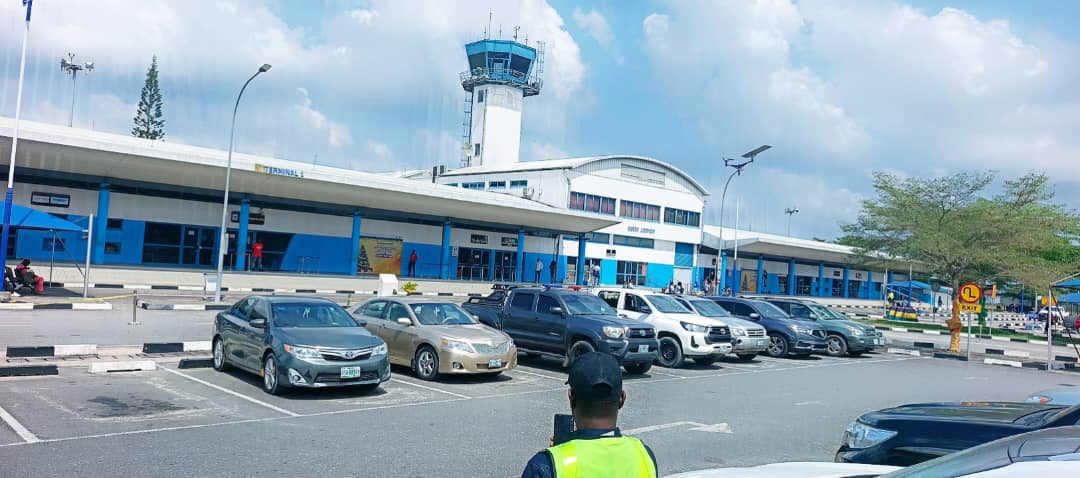
In March 2021, when a federal management team of the Federal Airports Authority of Nigeria (FAAN) stepped into Osubi Airport, what they encountered was not an aviation facility in decline but one already abandoned. Flight operations had been suspended for 17 months. Electricity had been disconnected. Workers were owed nearly a year’s salary. Suppliers were locked in court battles with former operators. Around the airport, hotels stood empty, houses had no tenants, and the runway itself had become a playground.
For a region that relied on the airport as its main gateway, the shutdown went far beyond aviation. It disrupted commerce, weakened security, and deepened isolation, forcing travellers to endure long road journeys through unsafe routes to reach alternative airports.
What followed was not a textbook recovery driven by fresh capital or concession reforms, but a difficult, incremental rescue shaped by internal revenue, institutional improvisation, and sustained operational pressure.


An Airport That Outgrew Its Original Design
Osubi Airport was never conceived as a commercial airport. Built originally by Shell Petroleum Development Company Limited (SPDC), otherwise known as Shell, as a transit estate, its purpose was to shuttle personnel between Lagos and oil facilities in the Niger Delta. That narrow mandate shaped its infrastructure, limiting capacity from the outset.
When Shell exited, and operational control passed to a non-aviation operator, Shoreline, the weaknesses became fatal. Technical expertise was lacking, debts accumulated, and infrastructure deteriorated. By the time federal authorities intervened, Osubi’s problems were structural, financial, and institutional.


Restarting From Absolute Zero
Reopening the airport required rebuilding basic aviation functionality. Runways and aprons had to be cleared and secured. Emergency and firefighting vehicles were restored. Navigational aids were reinstalled. Perimeter security was tightened. Power had to be reconnected after years of disconnection due to unpaid bills.
Crucially, the airport received no direct funding from the federal, state, or local government. Ownership disputes between shareholders meant that funding obligations under existing agreements were never fulfilled. Survival depended almost entirely on internally generated revenue, an unusual and high-risk model for a domestic airport in Nigeria.


Powering an Airport Without Power
Aviation operations cannot tolerate power failure. At Osubi Airport, the energy system had to be rebuilt from scratch. Public electricity was restored, and bills kept current, but reliability remained a challenge. Heavy-duty generators were salvaged and repaired. Industrial-scale UPS systems were revived to bridge power transitions. Solar inverter systems were added to support critical areas such as the control tower and passenger screening points.
The layered system ensured that power outages would not interrupt landings, takeoffs, or passenger processing. Today, transitions between power sources are largely seamless, often unnoticed by passengers, but they remain central to safe operations.


Security, Surveillance, and Safety
Security was another critical gap. The airport now operates with extensive CCTV coverage, a central control room, patrol vehicles, and coordinated radio communication across security agencies. These measures have strengthened response capacity and improved passenger confidence.
Wildlife control, a persistent aviation hazard, was also overhauled. With dedicated equipment and continuous runway sweeps, Osubi Airport recorded zero bird strikes throughout 2025, an uncommon achievement among domestic airports.

Comfort as an Operational Necessity
As flights resumed, passenger traffic surged, sometimes exceeding 800 travellers in a single day. The original terminal, never designed for such volume, quickly became overstretched.
Walls were reconfigured to expand waiting areas. Cooling systems were upgraded. Cleanliness was enforced as a core operational principle. VIP and protocol lounges are currently under construction to manage high-profile travellers and private jet operations, easing congestion and improving security control.
Outside the terminal, police facilities, sheltered car parks, convenience amenities, and controlled access points replaced the disorder that once defined the airport’s surroundings. These changes were not cosmetic; they were required to keep operations stable as demand grew.


Growth Meets Its Limits
Despite the recovery, structural constraints remain. The runway length limits the size of aircraft that can operate at Osubi Airport, restricting airline equipment choices and route expansion. A modern LED airfield lighting system, initiated under the Ministry of Aviation and Aerospace Development led by Olorogun Festus Keyamo (SAN), is nearing completion at Osubi Airport despite ownership complications. The upgrade will enhance pilot visibility, runway identification, and approach accuracy during night and low-visibility operations, but aviation experts note that only a runway extension can unlock the airport’s full commercial potential.
The terminal building itself is nearing capacity. With additional airlines preparing to commence operations, infrastructure expansion has shifted from an aspiration to an operational necessity.


The Leadership Factor
Behind the infrastructure recovery and operational stability is the leadership that steered Osubi through its most uncertain period. The airport’s turnaround coincided with the tenure of Mr Winston Egwuatu, the Airport Manager, who took charge when the facility was at its lowest point.
Managing an airport closed for over a year, burdened by debt, lacking funding support, and entangled in ownership disputes required decisions beyond routine administration. Under his management, Osubi transitioned from complete operational paralysis to a functioning multi-airline airport sustained largely by internally generated revenue. Power redundancy, security overhaul, wildlife control, passenger facility upgrades, and staff welfare improvements were implemented as responses to daily operational risks, not abstract plans.
The recovery underscores a broader lesson: infrastructure does not revive itself, and policy directives alone do not reopen runways. Institutions recover when leadership confronts dysfunction directly and refuses to normalise collapse.


Osubi Airport is no longer a forgotten airstrip. It is operational again, carrying passengers, supporting commerce, and restoring regional connectivity. Whether it evolves into a fully modern aviation hub will depend on decisions still ahead, but its survival stands as a case study in how determined leadership can reverse even the most severe institutional decline.