
By Abiodun Komolafe
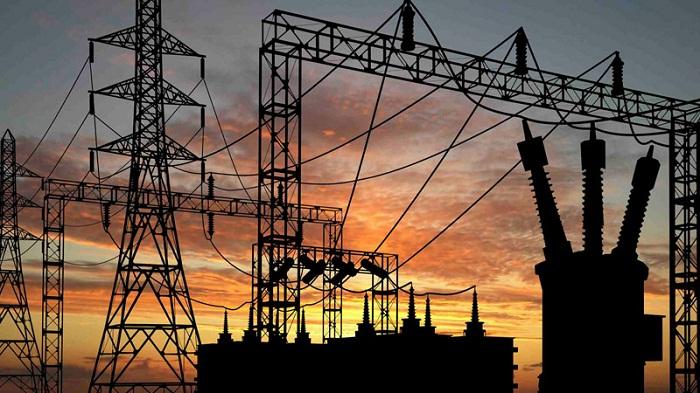
The title of this commentary reflects a question asked wherever people gather – on buses, in bars, and at parties. Modern life revolves around the reliable provision of electricity, water and mass transit. Without power, the simple task of pumping water becomes nightmarish; relying on handheld pumps is a physically exhausting struggle.
Dealing with our so-called electricity distribution companies is like living through a series of ‘tales of the unexpected’. It is a tragicomedy of the highest order! Many have endured the harrowing frustration of failing to load prepaid meters for days, even after payments have been cleared on their apps. And when the credit finally loads, there is zero guarantee that the power will actually follow. It is utterly ridiculous!
In effect, the consumer is forced to ‘gift’ these companies with interest-free loans for services they may never see. Unlike almost any other industry, these firms enjoy the luxury of idling on hundreds of millions in ‘prepaid’ funds while the customer is left unserved. The chance to squeeze easy profits out of these idle, trapped funds is irresistibly mouthwatering. Any business handed such an unusual windfall should, by all rights, be running at peak efficiency.
To put it in context, no one pays for goods at a supermarket or fuel at a station only to return a month later to finally collect what they bought. Yet, this is the ‘Eldorado’ these power companies enjoy – a dream scenario that any other business would kill for.
The Ibadan Electricity Distribution Company (IBEDC) is having a field day, acting with the typical arrogance of a monopoly that knows its customers have nowhere else to go. Right now, the consumer is holding the short end of the stick, forced to grin and bear it simply because Nigeria lacks the kind of small-claims courts that Margaret Thatcher so famously championed in the UK.
A court like that would finally give ‘David’ – the everyday consumer – the stones to take on the Goliath of monopoly power. Under that system, the state actually backs the little guy with legal aid, trials are wrapped up in weeks, and justice is swift. With the threat of heavy punitive damages hanging over their heads, these high-and-mighty firms would quickly realize that pocketing money for services they don’t deliver is a gamble they can no longer afford to take.
If, for instance, hundreds of consumers were to file individual claims or join forces in a massive class-action suit, IBEDC could find itself facing crippling liabilities that would threaten its very survival. Sadly, only Lagos and perhaps one or two other states have bothered to set up these small-claims courts. We don’t yet know how effective they’ve truly been, but their very existence is a hard-won victory for the everyday person. Every state in Nigeria must follow suit. It is the only way to finally put these broken monopolies and cartels under the microscope and hold them to account.
In a country like Nigeria, where institutions are often weak, inept, or outright corrupt, taking on Goliath is a Herculean task. The average consumer simply doesn’t have the funds or the legal aid to survive a judicial process that can drag on for fifteen or twenty years. He or she is up against a behemoth with the cash flow to hire the priciest lawyers – experts who know every trick in the book to keep a case stuck in court for decades. It is a system that breaks the faint of heart and, frankly, is a total waste of time.
This is exactly why monopolies like the IBEDC don’t bother themselves with the fact that they are meting out such blatant injustice to people who have already paid for services they never receive. What we are seeing is a clear, painful confirmation: the entire electricity ‘privatization’ remains a catastrophic policy failure!
Take Australia, where the debate keeps circling back to public ownership as the only way to ‘reboot’ a broken system. You don’t just flip a switch; it takes years of gutting the rot from the inside before any kind of private market can actually function. In Nigeria, however, that kind of disciplined turnaround feels like a pipe dream, for reasons we all know too well! The political will to act for the people – or the consumer – is nowhere to be found.
This means the radical surgery needed to save the patient is simply not on the table. Instead, the country will keep stumbling over obstacles to real growth and job creation, held back by an electricity framework that is as incompetent as it is laughably inept. No amount of foreign investment can help a nation achieve true progress under such conditions.
While the Federal Government has made commendable strides in stabilizing the macro-economy, it must now pause and face the rot in our electricity market. It must summon the courage for the brutal, inescapable surgery the system requires. It is better late than never!
Electricity providers also subject consumers to unfair billing practices through crumbling grid maintenance and sheer operational sloppiness, leaving us to suffer through frequent, soul-crushing blackouts. In a cruel twist, we – the consumers – end up paying for this unreliability through our tariffs, effectively subsidizing the provider’s own failure to deliver the power they promised and we paid for. Worse still, these providers pass the bill for their own waste directly to us.
Whether it’s the cost of running ancient, gasping power plants or the massive amounts of electricity lost through leaky, broken transmission lines, the consumer picks up the tab through opaque regulatory loopholes. These losses – where energy literally evaporates before it even reaches your door – become a hidden tax on every monthly bill. It is a scandalous arrangement: the Nigerian customer is forced to pay for ‘ghost’ energy they never actually touched, saw, or consumed.
This exploitation isn’t an isolated incident; it is a nationwide epidemic that raises ugly questions. Why isn’t IBEDC issuing official receipts for the massive sums squeezed out of communities under the guise of ‘replacing’ equipment? Are these levies even recorded for auditors to see? We don’t see this nonsense in the telecoms sector. MTN, Airtel, and Glo face constant vandalism, often in remote and dangerous areas. Yet, has anyone ever seen a telecom giant text customers in Ijebu-Jesa, Kontagora, or Umudike asking for contributions to fix a vandalized base station? Of course not. So why does IBEDC get a pass?
Why are consumers forced to pay for fixed assets like transformers and cables – items that belong to the company, not the people? When communities bow to these demands, they are essentially ‘gifting’ infrastructure to a private firm. They are paying for the very tools the company will use to bill them later. It is a blatant double-taxation on the poor that has no place in a civilized economy.
This isn’t just a grievance; it’s a practice that raises grave questions about regulatory compliance and consumer exploitation. The Economic and Financial Crimes Commission (EFCC) must be granted a federal mandate to forensically audit community levies collected over the last five years.
When audits do occur, the paper trail for these unrecorded contributions remains suspiciously opaque. No reputable firm would gamble its global standing on such murky financial channels. If a functional state truly exists in Nigeria, the regulators – and mutatis mutandis, Parliament and the police – should have demanded answers years ago.
May the Lamb of God, who takes away the sin of the world, grant us peace in Nigeria!
Email: ijebujesa@yahoo.co.uk.
Mobile: 08033614419 SMS only.