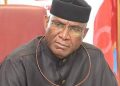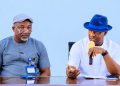
The call by the Nigeria Democratic Congress (NDC) governorship candidate in Delta State, Chris Iyovwaye, for Governor Sheriff Oborevwori to publish details of the state’s revenues and Federation Account Allocation Committee (FAAC) receipts has drawn attention to financial records and budget documents that are already publicly available through official state channels.
Iyovwaye, in a statement responding to Oborevwori’s Independence Day message, challenged the governor to provide a breakdown of how revenues and FAAC allocations were deployed between 2023 and 2026, including the proportion of the 2025 receipts committed to capital projects and recurrent expenditure.
However, available official records show that the Oborevwori administration has published budget documents containing details of projected revenues, FAAC receipts and expenditure allocations, providing a framework for assessing how public resources were planned to be deployed.
Budget documents provide spending framework
Delta State’s official 2024 approved budget document, for instance, lists total revenue of about ₦714.98 billion, including ₦564.29 billion in direct FAAC allocation. It also provides expenditure details, including more than ₦362.9 billion under the Capital Development Fund, alongside recurrent and other expenditure components.
The state’s 2024 citizens’ budget also publicly identified major capital projects and their budgetary provisions. Among them were the Ughelli-Asaba Road dualisation, Enerhen flyover, Ayakoromor Bridge, Trans Warri-Ode Itsekiri bridges and access roads, hospital equipment, classroom construction and water projects.
For 2025, the state presented an appropriation of approximately ₦936.08 billion, with ₦587.36 billion, or 62.75 per cent, earmarked for capital expenditure, while ₦348.72 billion, representing 37.25 per cent, was allocated to recurrent expenditure. The budget included ₦230 billion for roads, ₦67.42 billion for education, ₦30.55 billion for healthcare, ₦11.03 billion for water resources and ₦7 billion for agriculture.
The figures demonstrate that the state’s budgetary allocations have not been presented solely as recurrent spending. A substantial share has been earmarked for infrastructure and other capital programmes.
2026 budget raises capital expenditure emphasis
The trend continued into the 2026 fiscal year.
According to the Delta State Government, Governor Oborevwori presented a ₦1.664 trillion 2026 Appropriation Bill, with 70 per cent dedicated to capital expenditure. The administration described the budget as an acceleration of its MORE Agenda and a major investment in infrastructure and socio-economic development.
The governor had also explained in his 2026 budget presentation that statutory allocation was projected at ₦720 billion, representing 43.28 per cent of projected total revenue, while the administration expected improved internally generated revenue from reforms aimed at expanding the tax base and reducing leakages.
These publicly available figures provide some context to the political debate over how Delta’s increased federal allocations have been planned for and deployed.
Infrastructure spending under MORE Agenda
Beyond budget projections, the administration has repeatedly reported investments in roads, bridges, healthcare, education and other infrastructure.
The state government reported in 2025 that more than 513 road projects covering over 1,500 kilometres, alongside about 950 kilometres of drainage systems, were being undertaken across the state. It also reported upgrades to primary healthcare centres and general hospitals.
In May 2025, the Delta State Ministry of Economic Planning reported that Oborevwori had earmarked 42 projects for inauguration as part of his second-year activities. The projects included sections of the 46-kilometre Ughelli-Asaba dualisation, the Kwale-Beneku Bridge and roads in Sapele.
The administration’s infrastructure programme has also received comments from federal officials. During a June 2025 inspection of the Second Niger Bridge access road, then Minister of Works Dave Umahi publicly commended Oborevwori over the state’s role in facilitating the right-of-way and related processes for the access road to Issele-Azagba.
Accountability question remains part of public debate
The available documents do not, by themselves, constitute a complete audited account of every naira received and spent by the state between 2023 and 2026. Budget documents primarily show appropriations, projections and expenditure plans, while actual expenditure and revenue performance require budget-performance reports and audited financial statements.
Delta’s public financial-management infrastructure also includes an official budget-performance category, while the state’s Office of the Auditor-General publishes audit-related materials.
Consequently, Iyovwaye’s demand for a consolidated 2023-2026 breakdown is a political call for additional disclosure, rather than evidence that the state has published no financial information.
The NDC candidate also criticised the condition of Delta’s ports and argued that Warri, Koko, Sapele and Burutu could generate employment. He called for what he described as a governance “RESET” centred on transparency, industrialisation, job creation and accountability.
The Oborevwori administration, on its part, has consistently presented infrastructure development, human-capital investment, healthcare, job creation and economic expansion as central components of its MORE Agenda. In January 2025, the governor said his administration would scale up infrastructure delivery and personally inspect projects to ensure they were progressing as expected.
For Deltans, the emerging political debate ahead of the 2027 governorship election is therefore likely to turn not only on the amount of money received by the state, but also on the distinction between budgeted allocations, actual receipts, actual expenditure and independently audited results.