
By Abiodun Komolafe
The title captures the interwovenness of economics and the social factors that define our well-being. It is a reality that any lender or partner must weigh when judging the true creditworthiness of a nation. This interrelationship must be laid bare; otherwise, what is fast becoming an intractable problem will never be solved with the systemic overhaul it demands.
History shows us that over the last century and a half, a ‘war on poverty’ – to borrow the words of US President Lyndon Johnson in 1965 – is, when properly handled, actually a blueprint for economic development. People like the Brazilian President Luiz Inacio Lula da Silva, in his first outing, and successive governments in India, and many other developing countries, also realized that a well-constructed war on poverty can actually be a trajectory – indeed, the engine room – for sustained economic development.
Poverty is so pervasive that when it strikes, it strips away global aspirations and reduces one to an emotional simplicity that worships ignorance and celebrates mediocrity. For forty years, successive governments in India have used anti-poverty programmes to build a sustainable economic base. Even leaving aside the success of the ‘Green Revolution,’ Lula’s programmes in Brazil are profoundly instructive, as they are even more contemporaneous than the milestones of India’s past.
Nigeria’s problem is the poverty of our politics. We have more people than Brazil, yet we have less to show for it. While they used their numbers to drive production and social dignity, we have squandered our demographic weight, descending from a land of potential to the world’s poverty capital. This political poverty views the nation as a populace dependent on handouts from a supposedly benevolent establishment. Such a mindset fails to grasp that a war against poverty is the engine room for sustainable development – the only way to truly achieve what the Action Group (AG) manifesto promised in 1951: ‘Life more abundant.’
Leaders who refused to be bound by the politics of poverty – men like Obafemi Awolowo, Lateef Jakande, Solomon Lar, and Michael Okpara, whom Sam Mbakwe so closely emulated – used the state’s economic levers to build for the overwhelming majority. Visionary efforts like Awolowo’s Free Education could never have taken root if the mindset had been stuck on keeping the people dependent, as it is today. These initiatives, much like Jakande’s affordable housing, were forged as weapons to not merely alleviate, but to abolish poverty entirely. The legacy of such work will resonate for decades to come. The question is: Are those now using Awolowo’s name for election purposes emulating the late sage?
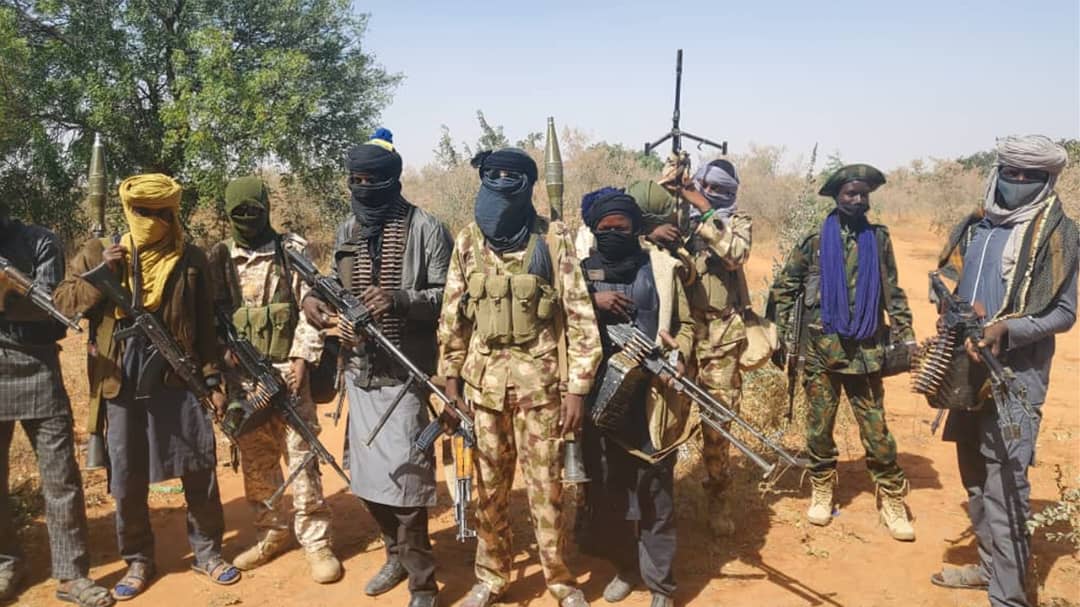
It is a hydra-headed monster, primarily because this weaponization of poverty helped trigger today’s insecurity plague. A neglected underclass was unleashed – a generation without the skills, training, or emotional stability to navigate modern society. A weak, ineffectual voice with an uncertain sound entered the public square with a swagger and it became the raw material for a factory producing every horror we now face, from kidnappings and marauding to the constant threats to our public safety. The chickens have come home to roost!
If, from the mid-70s oil boom, the Nigerian political establishment – both military and civilian – had implemented compulsory education up to age 16, and complemented it with mass affordable housing, modernized agriculture, and a foundation of basic industries, Nigeria wouldn’t be eyeing 160 million people trapped in multidimensional poverty; that number would be closer to 30 million. So far so sad! We are left with a staggering reality where nearly half of our youth are either unemployed or underemployed.
Even though the politics of Nigeria, as presently practised, has no ideological foundation, Nigeria’s liberation must begin by freeing the minds of our political establishment from their fixation on weaponizing poverty as a tool of political calculus. We urge President Bola Tinubu and the ruling All Progressives Congress (APC) to return to their 2023 manifesto pledge: to build a society based on the ‘Social Market’ economic model. This is the very framework that rebuilt post-war Germany from the ashes of 1945. It was the bedrock of the UK’s economic regeneration between 1945 and 1951, and the foundation of the global political consensus for decades. At home, this same Social Market philosophy inspired the landmark achievements of Awolowo’s government, the transformative era of Kwame Nkrumah in Ghana, and the few truly progressive chapters in Nigeria’s own history.
As Nigeria prepares for a second term, the Tinubu administration must reevaluate the imperatives of the Social Market model. Where properly implemented, this proven model has led to ‘life more abundant’, shared prosperity, and an all-conquering war against poverty – delivering a better life for the overwhelming majority of the citizens and their families. It is a model truly worth pursuing!
I have previously cited Vietnam, which, emerging from the ashes of war, has achieved a modern economic miracle by instituting policies that led to some of the lowest unit costs of electricity in the world. With this advantage, Vietnam is attracting record levels of investment to the extent that it now faces a ‘crisis of success.’ As we speak, the country reportedly lacks enough hotel beds to accommodate the hordes of tourists and investors flocking in. Total exports a year ago surpassed $400 billion; a Samsung manufacturing plant, deliberately located in Vietnam instead of South Korea to take advantage of lower energy costs, exported over $60 billion worth of manufactured goods in a single year. But for the enemies of our father’s house, Nigeria should have been in this situation, too!
Once upon a time, countries like Malaysia trailed far behind Nigeria. But where is Malaysia today? It is miles ahead. Today, Malaysia dominates the global palm oil industry. Compare Malaysia’s Gross Domestic Product (GDP) to Nigeria’s and you will marvel at the progress. This trajectory proves that we must urgently review our economic model, looking back to the visionary paths of the Awolowos and the Nkrumahs.
While the models of the Awolowos, the Nkrumahs, and the Jawaharlal Nehrus of this world were built on giving their people a hook so they could fish for their own survival, the politics of poverty today constructs a relationship of total dependence. Nigeria sat on Delilah’s lap and challenges arose! Organized by anger, moments and sparks, the political space is no longer safe or accessible. Now, it traps the populace in a syndrome where they never become productive; instead, they are fed a pittance just to stay alive, living off the political establishment like freeloaders. Because this politics doesn’t recognize capacity, talent and competence, the citizen is no longer a participant but a bystander.
It must be noted that hollow slogans like “Dìbò kóo sebè” (Vote and cook soup) and “Kó dúró l’ókè” (Let it stay at the top) were never the tools of those true statesmen. After all, how many pots of soup can fifty thousand naira buy? Is that enough to trade away one’s life and values for the next four years? To even secure that pittance, one must trek to Mount Taborah, or Baba Abiye, or Olorunkole, for a miracle!
It is due to the lack of a functioning social contract that basic necessities like antivenoms cannot be as standard and available in our hospitals as paracetamol. Today, even the basics are gone! In a country where justice is business, the strongest – men with hardened hearts and closed ears, whose minds are closed by prejudice – will always use their influence to oppress the weakest. Of course, that’s where the tragedy lies!
May the Lamb of God, who takes away the sin of the world, grant us peace in Nigeria!
Email: ijebujesa@yahoo.co.uk.
Mobile: 08033614419 SMS only.