
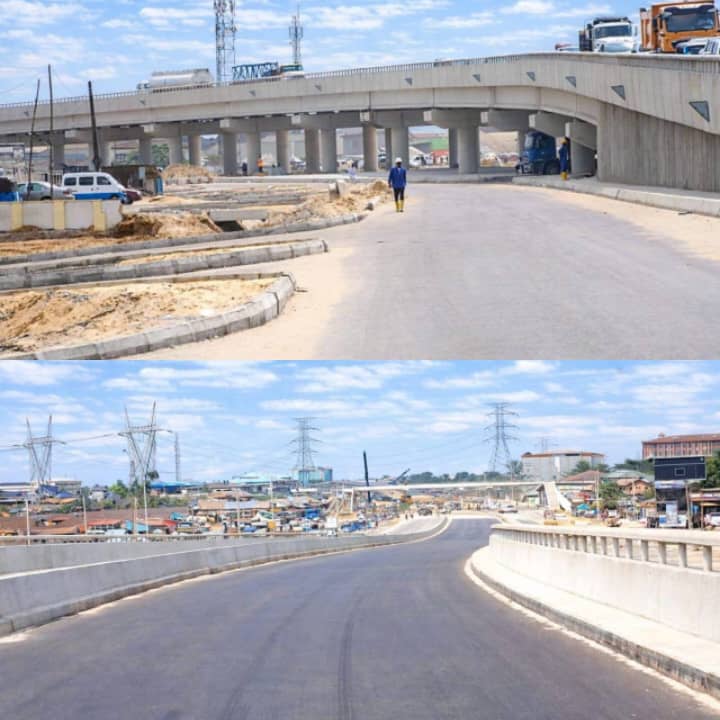
Two years after Delta State Governor, Rt. Hon. Sheriff Oborevwori, broke ground for major flyovers, cloverleafs, and road expansion projects in the Effurun–Warri metropolis, the state is approaching a decisive phase.
The recent pre-handover inspection of the DSC Roundabout Flyover in Effurun signals that one of the administration’s most ambitious urban infrastructure interventions is nearing completion. While the engineering progress is evident, the real test lies beyond construction.
The flyover projects, designed to permanently ease gridlock between Effurun Roundabout, PTI Junction, DSC Roundabout, Enerhen Junction, and Marine Gate, were conceived to restore sanity to one of Delta’s busiest transport corridors. If properly managed, they promise smoother traffic flow, improved safety, and economic efficiency for residents of Uvwie and Warri South. Yet, long before formal handover, familiar warning signs are already visible around the corridors: roadside traders creeping toward traffic islands, illegal motor parks resurfacing under bridges, touts harassing motorists, and destitutes and miscreants occupying pedestrian spaces meant to guarantee safety and order.
These developments expose a chronic weakness in public infrastructure management. In many Nigerian cities, new flyovers quickly deteriorate into informal markets, refuse dumps, and criminal hideouts, not because they are poorly built, but because regulation collapses once construction ends.
Delta State must resist this pattern. The Oborevwori administration cannot afford to deliver impressive structures only to surrender them to disorder through neglect and weak enforcement.
The pre-handover inspection led by the Commissioner for Works, Comrade Reuben Izeze, alongside senior government officials and representatives of the contractor, should therefore serve as a transition into a robust maintenance regime. This must include clear rules prohibiting trading, parking, and loitering beneath and around flyovers; permanent traffic and environmental enforcement presence at strategic junctions; coordinated action involving transport unions, local councils, and security agencies; and sustained public sensitisation to reinforce that these structures are public assets, not informal economic spaces. Without this level of discipline, congestion will return in new forms and public safety will be compromised.
Governor Oborevwori has repeatedly spoken about legacy projects and value for money. That legacy will not be defined by concrete pillars or ribbon-cutting ceremonies, but by whether these flyovers remain orderly, functional, and secure years after commissioning. Delta State has built the infrastructure; it must now demonstrate the political will to protect it. Failure to do so would convert a landmark investment into yet another case of squandered opportunity.