

By Abiodun Komolafe
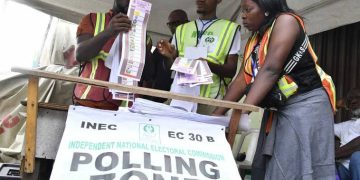
There is a problem about the institutional framework in which the Nigerian state as presently constituted is based. To have democracy, good governance and credible elections, there must be institutional reforms and great accountability in government. The three are interwoven, only that we tend to think that democracy is all about elections. In any case, the fact that those ingredients are currently missing is an indication that Nigeria still has a long way to go. After all, without democracy and governance, there can’t be credible elections.
To put it politely, Nigeria, even as we speak, has very weak institutions, and without a functional justice system, she can’t be said to have credible elections. For any democracy to stand and be as its definition, the power of credibility cannot be underestimated. However, the achievement or otherwise of this ‘credibility’ is a huge task, because credibility means different things to different actors in democracy, more so as the definition hovers around the same center: the people. Notwithstanding, the issues of credibility in our elections requires a serious conference, taking into consideration the level of litigations that always go with elections in Nigeria. Take, for example, the United Kingdom where only one electoral dispute has ever gone to court over a long period of time. Of course, it is because she has a functional judiciary and nobody would want to waste his resources on frivolous litigations. The lawyer who handles such cases can even be disbarred. So, how come Nigeria remains a semi-democratic country 25 years into the 4th Republic?
In any serious democracy, it is the government that sets the right template for an election to hold. Unlike countries like Spain, France, South Africa, even some other African countries, Nigeria needs a constitutional court so that her political practitioners can originate and conclude constitutional issues in record time. In a constitutional court for instance, the needless imbroglio currently troubling the peace of Rivers State won’t even take more than two to three weeks to resolve, instead of this long-winded abracadabra, which is no doubt affecting the perception of Nigeria as an unserious economy.
What we are saying is that governance and elections are intertwined and that a political economy that is lacking in internal security mechanisms, weaponizes and actually glorifies poverty is not one where credible elections can be held because it is based on state capture. In a country under the subordination of the state to powerful individuals and vested interests, the idea is to make the people very poor so that, on an election day, prospective voters can be induced. Even when there’s no election, the masses are induced with palliatives. The tragic truth is that political entrepreneurship has become the parameter for politicking and the determinant of victory. Otherwise, why should minimum wage even be a debate in Nigeria?
Again, that’s where the late Obafemi Awolowo excelled as a leader! But how come successive leaders have not been seeing the link between the minimum wage, the purchasing power parity and investments? Call it an election gimmick but that’s why Governor Godwin Obaseki of Edo State deserves a standing ovation. Well, it’s not that N70,000 as minimum wage for workers in the state is fair enough but then, the governor has demonstrated that a worthy credit analyst would prefer Benin City where the purchasing power parity is N50,000.00 to Gusau where the purchasing power parity is N31,000.00. In a way, Obaseki has shown that, for any economy to attain its potentials, it is better to have 15 million people who are on a living wage of N105,000.00 per month than to have 200 million people who are on a minimum wage of N30,000.00 per month.
‘Ojú to dilè ni iroré ń so.’ (Pimples usually infect an idle face. The notorious truth is that we can’t have functional democracy, good governance and credible elections without a sound educational system. Had Nigeria also been blessed with a sensitive political class, Nigerians would have been benefiting from free and compulsory education as far back as 1974 or 1975. Of course, the difference would have been that Nigeria would not have been having all these problems because of a better educated population. Matter-of-factly, the better educated the people are, the better and the saner the choices. A better educated population is a better informed and more productive population. But when politics fails to deliver its goods to the people, waiting for much chemistry to work at the same pace for development to show up becomes the norm. Obviously, that’s what Awolowo got right and that’s why people like Joseph Stiglitz won the Nobel Prize for Economics.
Secondly, compulsory education is the best form of population control. On the day of Nigeria’s independence in 1960, the United Kingdom as the parting colonial power had 7 million more people than Nigeria. Whereas Nigeria’s population grew from 44,928,342 in 1960 to 229,152,217 in 2024, the British population has grown by only 15.34 million since 1960. The implementation of the Education Act of 1947, which made education free and compulsory up to the age of 18 in the UK led to the halving of her population within one generation. Why and how? Educated people “marry later” and have fewer children. What’s more? Educated populace is better skilled, has higher purchasing power parity and many other advantages. That’s why countries like Italy and Japan have declining population growth. They are actually begging and bribing their citizens to have more children. For Nigeria, the story is pathetically different!
Forget the delusion of grandeur, unless some steps are taken in the right direction, Nigeria as a country may be fast sliding into irrelevance. For example, South Africa is currently the biggest economy in Africa, of course with the soundest fundamentals. She is followed by Egypt and Algeria and only God knows the true occupier of the 4th position between Nigeria and Morocco. South Africa has strong institutions of the state. As a matter of fact, the ruling African National Congress (ANC) is already terrified of losing the forthcoming elections. Most importantly, she has basic industries like iron and steel and machine tools. So, she manufactures and exports cars to Europe. Unlike Nigeria, South Africa doesn’t assemble cars. As former President Donald Trump once said, “if you don’t have steel, you don’t have a country.” In terms of fundamentals therefore, how to arrest Nigeria’s descent into irrelevance should be the key question.
But how did we get here? When Nigeria decided to throw away the Lyttleton’s, 1960 and 1963 Constitutions, it became obvious that the country was gone. Brazil currently operates the 1988 Constitution, which is the 7th enacted since the country’s independence in 1822, and the 6th since the proclamation of the republic in 1889. Look at today’s Brazil! She’s currently the world’s 9th largest economy. Not only that, 92% of all new cars sold in Brazil are powered, not by petroleum motor spirit, pms, but by the ethanol derived from sugarcane. For greater certainty, Brazil is a huge producer of sugarcane. Impliedly, had Nigeria kept up her existence on the 1960 and 1963 Constitutions, she’d have been powering not less than 92% of her cars by ethanol derived from cassava. After all, dear country is currently the world’s largest producer of cassava with an annual output of over 34 million tonnes of tuberous roots. What this means is that, instead of buying a litre of pms for N700.00, ethanol derived from cassava would not have cost more than N130.00. Besides, that would have been a boost for agriculture and industry would have been competitive because its cost would be lower. Added to these is that the destiny of employment generation in the country would have been given a lift-up.