
By Emmanuel Onwubiko
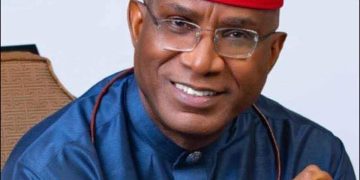
When Senator Prince Ned Munir Nwoko entered the Nigerian Senate in June 2023, he came bearing more than a constituency mandate—he brought a vision. In less than two years, he has submitted over 30 bills, moved upwards of 20 motions, and delivered more than 50 community-based projects in Delta North alone. It’s a pace few Nigerian legislators manage even over multiple terms. What distinguishes Senator Nwoko is the coherence of his agenda: each bill, motion, and solar-powered streetlight contributes to a broader vision of a Nigeria rooted in unity, dignity, economic sovereignty, and justice.
In a chamber where speeches often outweigh substance, Nwoko stands out. He has proposed 31 bills—from constitutional amendments to sectoral reforms—with remarkable depth. His advocacy for the creation of Anioma State aims to rebalance federal representation and foster development in the Southeast. His push for diaspora voting seeks to enfranchise millions abroad, while a Central Bank amendment mandates local currency payments, reinforcing monetary sovereignty. He has also introduced bills for a Social Security Agency to alleviate poverty and a Waste & Malaria Eradication Agency to tackle health and environmental crises from the ground up.
His legislative vision is forward-looking. A proposed amendment to Nigeria’s Data Protection Act would require foreign social media platforms to establish local offices and servers—asserting digital sovereignty. A controversial firearms regulation bill demonstrates his willingness to engage creatively with Nigeria’s insecurity challenges.
On the Senate floor, Nwoko’s motions reflect similar depth. He has demanded reparations for victims of the 1967 Asaba Massacre, advocated for an end to oil theft and gas flaring in the Niger Delta, and called for Africa to be granted a UN veto power—anchoring historical justice and geostrategic equity at the center of national discourse. He has also raised concerns about foreign-currency payments to state workers and the need to improve access to local healthcare and education.
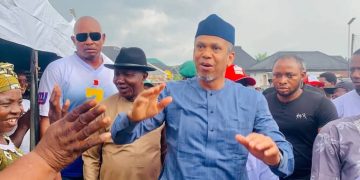
What transforms his legislative proposals into tangible change are his deliverables in Delta North. More than 50 completed constituency projects span infrastructure, healthcare, education, security, and agriculture. Solar streetlights now illuminate once-dark rural roads. Communities previously abandoned now have solar-powered boreholes. Clinics, schools, and police stations have been upgraded. Farmers have received seeds and fertiliser, youths have undergone vocational training, and women have been empowered through targeted initiatives. These projects represent governance by results, not rhetoric.
Senator Nwoko also chairs two critical Senate committees—on crude oil theft and on reparations and repatriations. These are not routine assignments; they involve high-stakes issues that touch Nigeria’s economic lifelines and moral conscience. His leadership of both panels signals the trust of his peers and his commitment to accountability and institutional reform.
His advocacy extends beyond the chamber. He has toured major oil installations in Delta North, pressing for transparency and equity in revenue sharing. On social media, he has been vocal about data privacy and platform accountability. His promotion of irrigated farming and food self-sufficiency confronts Nigeria’s paradox of importing crops it could grow. His speeches consistently bridge national ideals with practical policy steps.
What’s striking is the alignment between his rhetoric and results. Diaspora voting? Bill submitted. Economic sovereignty? Central Bank amendment filed. Social safety nets? Social Security Agency bill introduced. Community empowerment? Over 50 projects completed. Historical justice? Motions filed, committees led. Digital sovereignty? Data protection amendment proposed. Local security? Firearms and defence education bills in motion.
This consistency stems from deliberate planning, political will, and a clear institutional strategy. It also requires discipline—juggling legislative duties, oversight responsibilities, constituency engagement, and public advocacy simultaneously. In a system where many struggle with even one of these, doing all four effectively is uncommon.
Nigeria stands at a crossroads. Insecurity is rampant, the economy unstable, and youth unemployment threatens the nation’s future. Amid this turbulence, Nwoko’s blend of legislative ambition and tangible constituency projects presents a model worth studying. The diaspora voting bill could reconnect the nation with its global human capital. The Anioma State proposal addresses marginalisation. The Central Bank bill reasserts financial control. The waste-and-malaria initiative and rural infrastructure signal bottom-up health reform. The social security plan tackles entrenched poverty. The data regulation bill envisions ethical digital governance.
Naturally, his agenda faces headwinds. Constitutional amendments require supermajority support. Funding must match intent. The naira-only rule may spark state resistance. The Anioma State proposal could trigger ethno-regional opposition. Social media companies may resist data localisation mandates. These challenges will test both the feasibility and durability of his vision.
But this is where Nigerian governance often falters—bridging the gap between bill and budget, motion and implementation. That’s why Nwoko’s community projects matter. The boreholes, solar lights, and clinics are more than infrastructure—they’re symbols of what functional governance can look like. They show that state action can still kindle hope.
While critics may dismiss the Senate as a talk shop, few legislators have matched words with this level of execution across multiple sectors. In a body steeped in transactional politics, Nwoko is pushing for coherent, integrated policymaking. He is making the case that democracy works best when legislation, oversight, and grassroots development move in tandem.
This matters in a time of deep institutional distrust. Public confidence in governance is at a low ebb, with many viewing the legislature as inefficient and corrupt. Nwoko’s approach—connecting laws to local impact—seeks to rebuild that trust. By delivering both bills and boreholes, committees and clinics, motions and empowerment programs, he is constructing bridges between citizens and the state.
Still, the larger battles lie ahead. Will the Anioma State bill clear committee stages? Will diaspora voting survive constitutional review? Can Central Bank reforms withstand elite pressure? Will the malaria agency secure funding? Can digital sovereignty survive pushback from global tech interests? These are the proving grounds for his legislative legacy.
Early indicators suggest he’s in this for the long haul. His legislative focus touches Nigeria’s core fault lines: monetary policy, regional equity, diaspora engagement, digital infrastructure, justice, agriculture, and security. This is no accident—it signals strategic positioning and long-term commitment.
In under two years, Senator Nwoko has demonstrated that Nigerian politics can operate with urgency and focus when vision is matched by action. He has shown that legislation need not be symbolic; it can be catalytic. As he once put it, “a country of seven hundred different projects and seven hundred different stories doesn’t equal progress.” Real progress, he argues, requires unified frameworks—agricultural policy tied to food sovereignty, data laws tied to accountability, diaspora voting tied to national integration.
No, he is not offering utopia. But he is testing the possibility of practical governance—one that drafts laws and delivers light. He is probing whether a coherent, people-centred Senate agenda can make a real difference. He is showing that vision, supported by implementation, can transcend the theatre of politics.
There is a vacuum in Nigerian leadership today. The naira continues to decline. Kidnappings worsen. Public services falter. Politicians seem detached from the people’s lived reality. Into this vacuum, Nwoko offers something rare: a narrative grounded in evidence. A story told not only in Senate bills, but in the lit streets of Delta North.
He is not above critique—no public servant should be. Power corridors are treacherous; idealism is often tested by entrenched resistance. But if Senator Nwoko stays the course—passing landmark bills, securing funding, scaling projects-he might just prove a fundamental truth: that coherent, citizen-centred governance is possible in Nigeria.
We are watching. Nigeria should watch too. And perhaps, learn.
– Emmanuel Onwubiko is the founder of the HUMAN RIGHTS WRITERS ASSOCIATION OF NIGERIA and was NATIONAL COMMISSIONER OF THE NATIONAL HUMAN RIGHTS COMMISSION OF NIGERIA.