

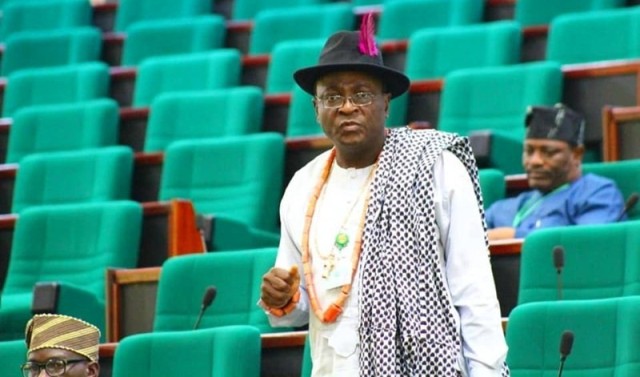
The House of Representatives erupted in chaos on Tuesday as lawmakers clashed over a contentious motion to rescind the Electoral Act Amendment Bill, a move placing Hon. Francis Waive, Chairman of the House Committee on Rules and Business, at the center of the controversy.
Waive had moved the motion asking the House to reverse its December 2025 decision, which adopted the compulsory real-time electronic transmission of election results to the Independent National Electoral Commission’s Results Viewing portal (IReV).
His motion sought alignment with the Senate, which initially opposed the real-time transmission clause but recently approved it with a backup manual collation option.
When Speaker Tajudeen Abbas put the motion to a voice vote, the “nays” appeared louder than the “ayes”.
Despite this, the Speaker ruled in favor of Waive’s motion, igniting protests from lawmakers who shouted their objections, forcing the House into an executive session to restore order.
The December 2025 clause had stipulated that presiding officers must electronically transmit results from each polling unit to IReV in real time, after signing and stamping form EC8A, and countersigning by candidates or polling agents where present.
The Senate, however, had initially rejected this provision, leading to a bitter standoff between the chambers.
With the recent Senate reversal, both chambers now face the task of harmonizing the conflicting bills through a joint conference committee.
Opposition parties are urging the National Assembly to maintain the House’s version, which prioritizes real-time transmission as a safeguard for transparency.
Hon. Waive’s bold move has now placed him squarely in the political spotlight, drawing both criticism and praise as lawmakers, parties, and electoral stakeholders debate the future of electronic election reporting in Nigeria.