
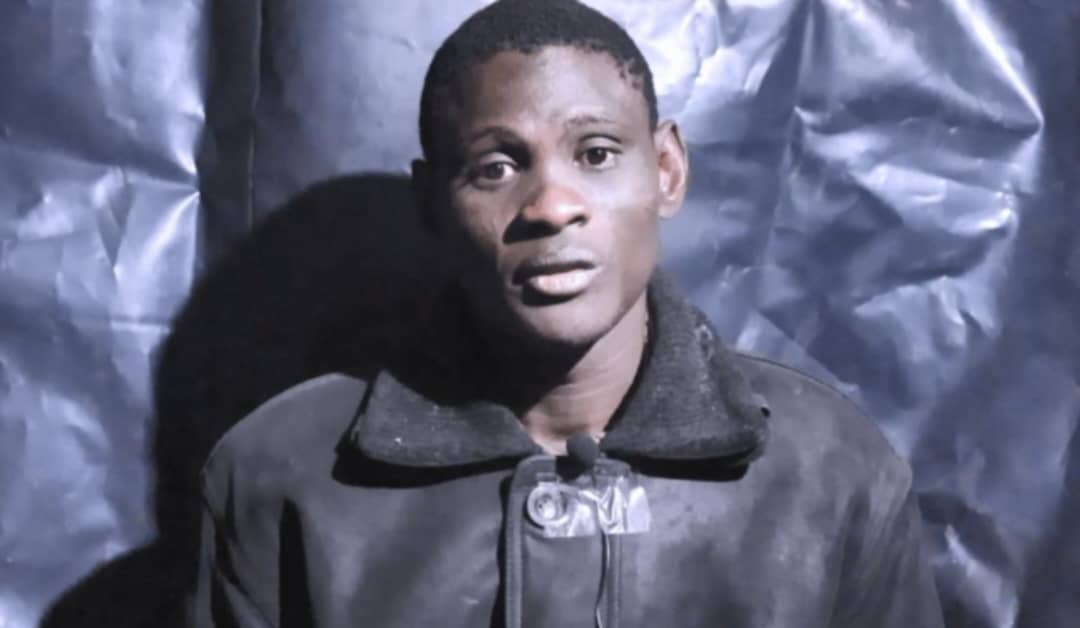
A Nigerian man previously reported killed in the Russia–Ukraine war has been confirmed alive after emerging as a prisoner of war in Ukrainian custody, months after his name circulated online among alleged foreign casualties.
The man, 32-year-old Balogun Adisa Ridwan, was earlier listed as dead in media reports that claimed several Nigerians had been killed after being recruited and deployed to the front lines of the conflict. Those reports, which circulated widely in February, alleged that Balogun and three others died after being lured abroad under false pretences.
However, a subsequent report by United24Media contradicts those claims, stating that Balogun was captured alive by Ukrainian forces on January 13, 2026, near Lyman in eastern Ukraine, after surrendering at the battlefield.
According to the report, Balogun had travelled to Russia on a tourist visa in search of civilian employment. He said he hoped to secure work as a mechanic or engineer but was instead taken to a military facility, where he was asked to sign documents written in a language he could not understand.
Balogun claimed he was denied access to a translator and prevented from using his phone, which he said was confiscated. He was subsequently grouped with other foreign recruits and deployed to the front after only a short period of training.
“The day we were signing the contract, I didn’t understand the language,” he said in remarks quoted by United24Media. “They didn’t allow us to use our phones to translate. I thought maybe they would put me in my field. I didn’t know they would send me to war.”
Faced with live combat, Balogun said he and another foreign recruit decided to surrender immediately upon encountering Ukrainian troops. He described his treatment in captivity as humane, claiming he was not harmed and was provided with clothing, food, and shelter.
While Balogun remained in detention, news of his alleged death spread in Nigeria. His name reportedly appeared on a list said to have originated from a closed WhatsApp group allegedly used by African fighters involved in the war, leading family members and acquaintances to believe he had been killed in action.
Now confirmed alive, Balogun is appealing for assistance to return to Nigeria. He insists he never intended to participate in any armed conflict and maintains that he was deceived into military service.
“I travelled to Russia on a tourist visa to find a job,” he said. “I left home to feed my family. The Russian government totally fooled me and sent me to war.”
Reacting to similar reports, the Nigerian government has warned citizens against involvement in foreign armed conflicts. The Nigerian Ministry of Foreign Affairs recently described such cases as alarming and said investigations were ongoing in collaboration with domestic and international partners.
The Ministry cautioned that Nigerians were being targeted through deceptive recruitment schemes involving false promises of employment, security work, education, or migration opportunities. It also urged parents, guardians, community leaders, and schools to educate young Nigerians about the legal and personal risks involved.
Balogun’s case underscores growing concerns over the vulnerability of migrant job seekers amid the prolonged war and highlights the difficulty of verifying information in conflict zones, where the line between casualty, combatant, and victim of deception is often blurred.
Once mourned as dead, Balogun now faces the challenge of proving he was not a willing fighter, but a survivor of a journey that went tragically wrong.